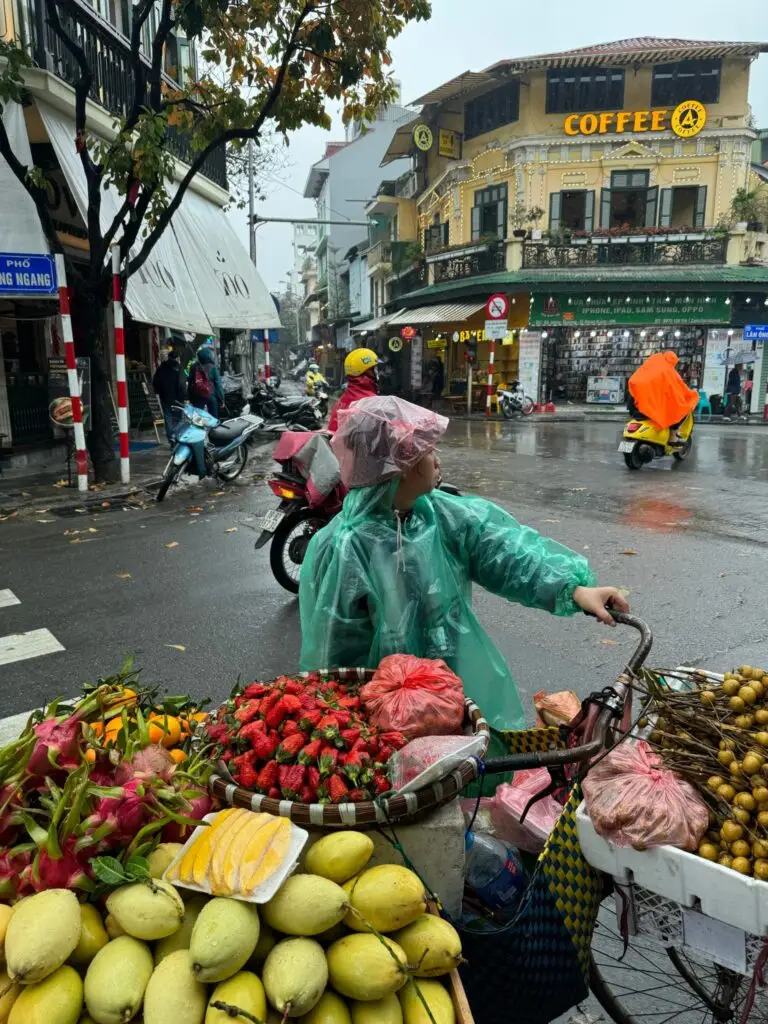
Vietnam has a rather spectacular way of making you realize how many assumptions you carry around without ever questioning them. You arrive expecting certain things to work a certain way, largely because that’s how they’ve always worked wherever you happen to live, and within a few hours, the country has politely declined to participate in any of them.
I absolutely loved Vietnam. I loved it enough that, if the heat weren’t constantly threatening to melt my face off, I could genuinely imagine living there. That’s not to suggest the country was always comfortable, pristine, or particularly easy to navigate. It was none of those things consistently, but I found it fascinating precisely because it wasn’t interested in conforming to my expectations.
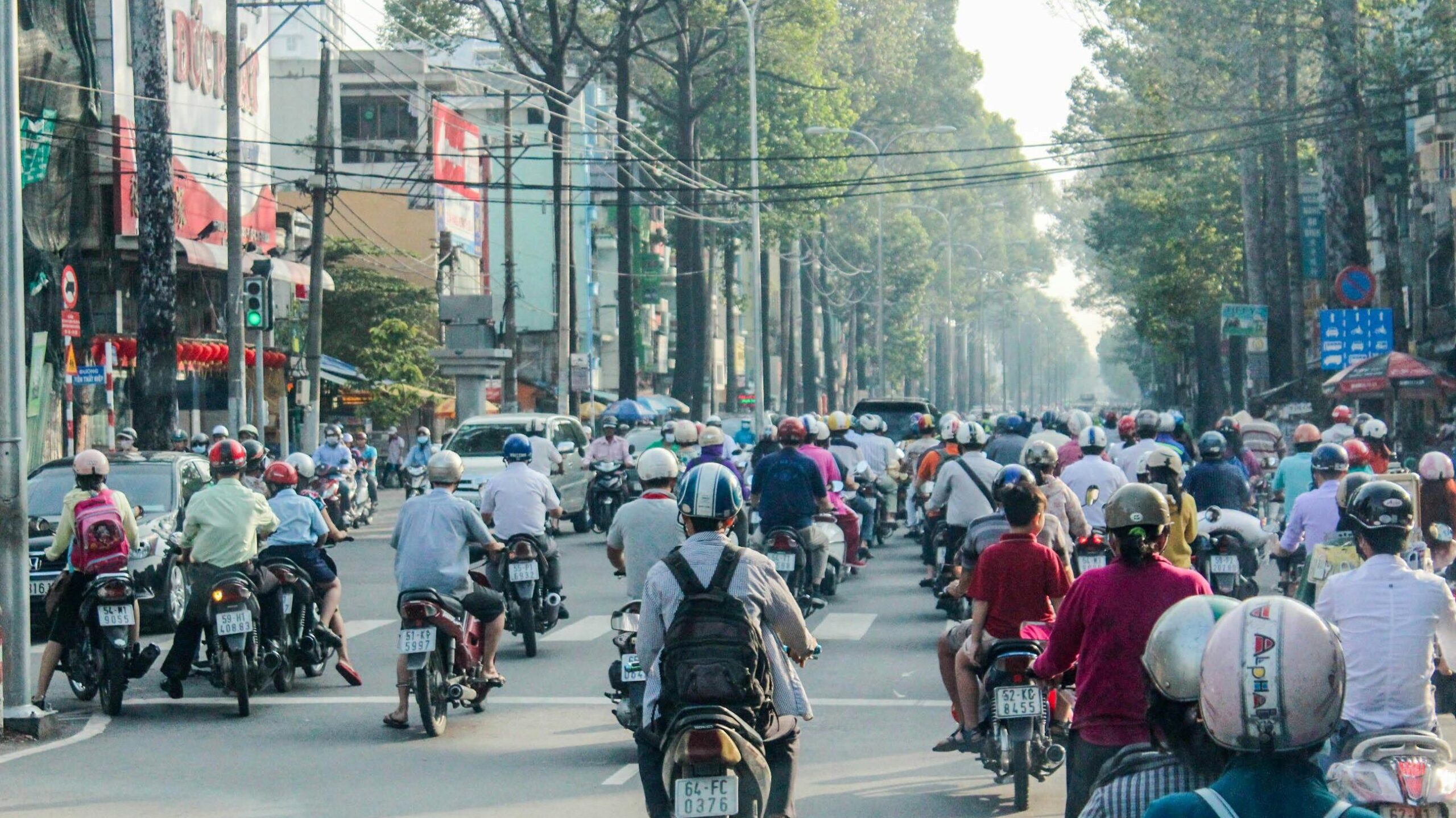
Vietnam doesn’t ease you in. You step into the streets of Hanoi and the country is already mid-conversation, with motorbikes coming from every direction, people conducting business on the pavement, and an entire city carrying on around you. What initially looks like chaos starts becoming considerably more interesting once you realize that the people living there aren’t nearly as bewildered by it as you are.
The Street Is Not Just a Way to Get Somewhere
The traffic is probably the first thing that challenges your understanding of how a city is supposed to function. In Hanoi, motorbikes occupy what seems like every conceivable space, sometimes carrying enough passengers, groceries, and household belongings to make you question whether the laws of physics have been temporarily suspended.
What genuinely baffled me was the number of beautiful, expensive cars navigating all of this without a dent in sight. I couldn’t understand how they weren’t constantly colliding with something. In America, half those cars would have been through the body shop fifteen times over, and that’s before somebody hit them in a parking lot.
Crossing the street can feel like an elaborate practical joke being played on foreigners. You look for the comfortable opening you’re accustomed to, only to discover that traffic isn’t particularly interested in providing one. People navigate around one another through a constant series of small adjustments, and the result looks alot like a the game frogger we played as children only with considerably less accidents.
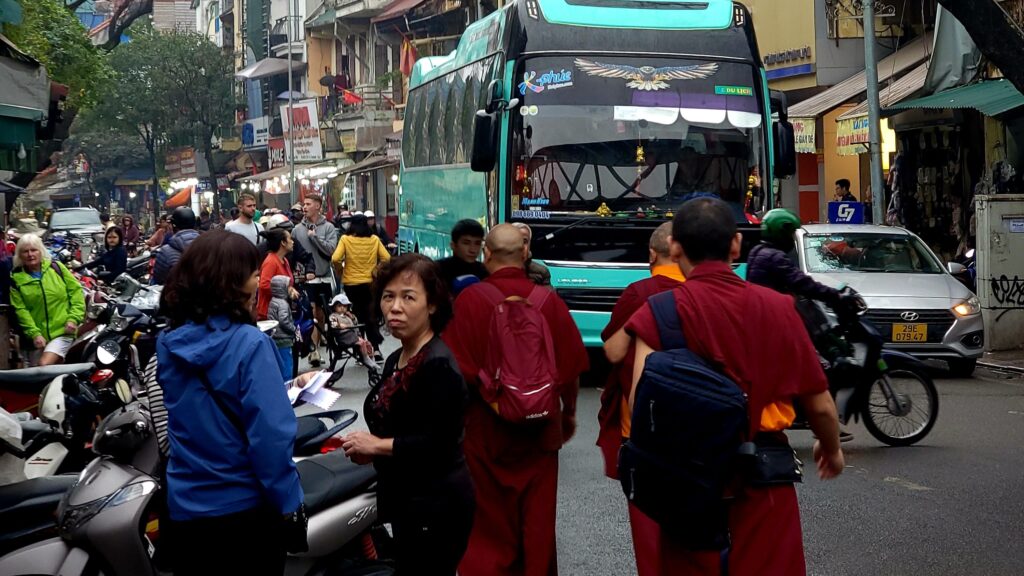
What I learned was that crossing required a little courage, a clear sense of purpose, and, apparently, the confidence to direct traffic with my bare hand. I’d extend my arm, raise my palm like I was telling the entire city to stop, and walk steadily across while motorbikes adjusted around me. I still cannot quite believe how well that worked. By the time I came home, I was genuinely disappointed that I couldn’t simply raise my hand and expect Chicago traffic to cooperate. I’m fairly certain I’d be flattened before I reached the second lane, which seems terribly unreasonable now that I’ve experienced the alternative.
I’m not suggesting anyone test this theory by marching blindly into traffic. Vietnam has traffic laws, road accidents are a serious concern, and a raised hand is hardly a guarantee that someone will stop, although it did work for me literally every time. So again, spoiled. It’s simply remarkable to experience a street-crossing culture so different from the one you’re accustomed to.
The sidewalks are another adjustment. In parts of Hanoi, they’re occupied by parked motorbikes, food vendors, restaurant seating, and businesses operating directly onto the street, leaving pedestrians to negotiate whatever space remains. It isn’t always convenient, especially when you’re already melting in the heat, but it does mean you’re watching everyday life unfold rather than merely walking past it.
Vietnam’s Economy Is Happening Right in Front of You
Vietnam was the first communist country I’d visited, and I arrived with certain expectations about what that might look like. What I encountered was an extraordinary amount of commercial activity, from family-run businesses and street vendors to cafés, restaurants, and shops occupying practically every available space.
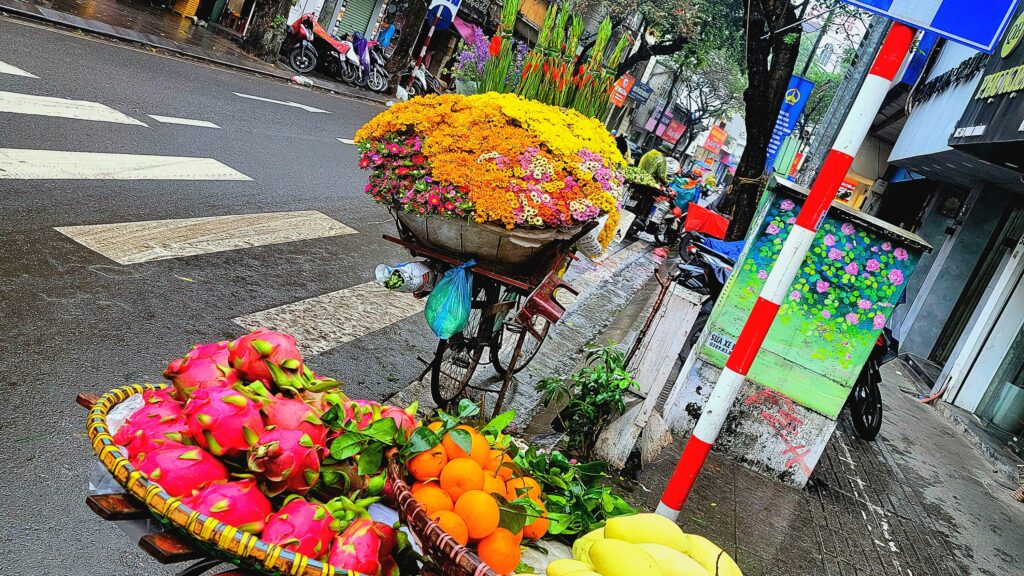
Vietnam is a one-party socialist republic, but its political system doesn’t preclude a market economy. Economic reforms introduced under Đổi Mới in 1986 expanded the role of private enterprise, helping transform the country into a major manufacturing and trading economy. According to the World Bank’s Vietnam overview, that transformation has also contributed to a dramatic reduction in poverty.
Of course, seeing a thriving commercial environment as a tourist doesn’t tell you everything about life under Vietnam’s political system. Restrictions on political expression and dissent remain real, even if they aren’t necessarily apparent to someone visiting for a couple of weeks.
What interested me was the contrast between the political image I’d grown up with and the economic reality I was observing. Commerce was woven into residential neighborhoods and everyday social life, often without the separation between home, work, and public space that I’m accustomed to seeing in the United States.
Vietnam wasn’t contradicting its political identity simply by having a flourishing business culture. It was challenging my rather limited assumptions about what that identity meant.
Coffee Culture Explains More Than You Might Think
If there’s one thing Vietnam taught me to take seriously, it’s coffee. Frankly, Vietnamese coffee deserves its own religion, and I would happily attend services.
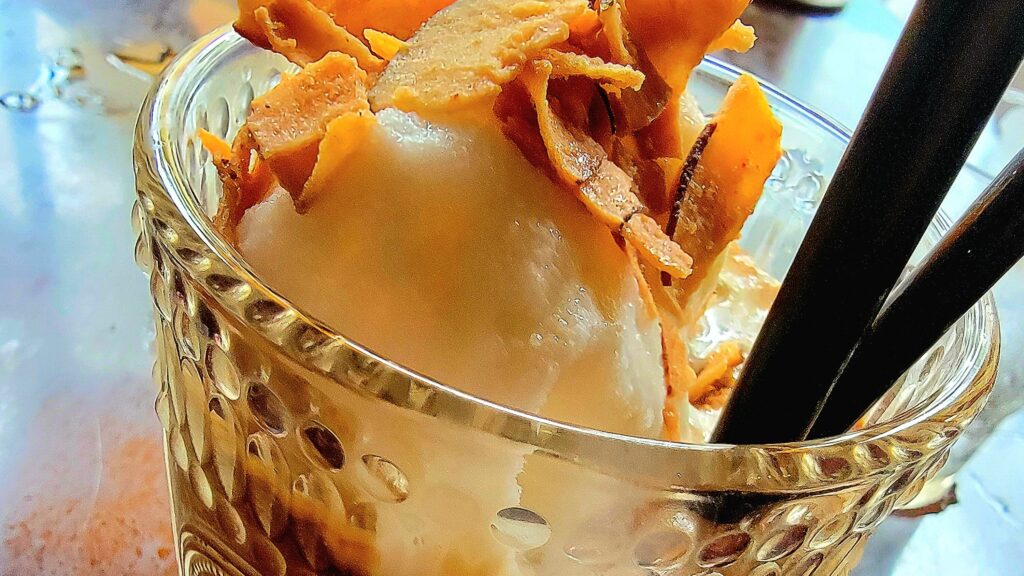
Vietnam is one of the world’s largest coffee producers, second only to Brazil, and a global leader in robusta production. Its coffee industry is internationally significant, but what fascinated me was how that agricultural powerhouse translated into such a distinctive everyday coffee culture. The International Coffee Organization provides a useful picture of Vietnam’s importance to the global market, although the experience of actually drinking coffee there is considerably more entertaining than production statistics.
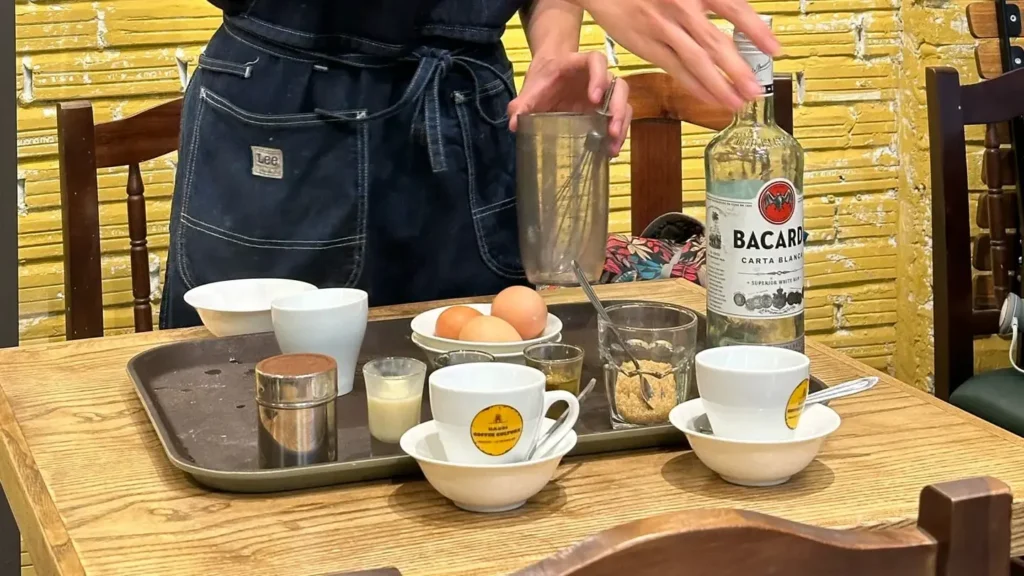
Traditional Vietnamese coffee is often brewed using a small metal phin filter, with robusta beans producing a bold, frequently bitter flavor that works particularly well with sweetened condensed milk. Then there are the variations: coconut coffee, egg coffee, iced coffee, and an increasingly inventive specialty-coffee scene.
I tried practically everything I could get my hands on. Some preparations were so sweet that I had to reconsider how much sugar I was willing to consume in the name of cultural appreciation, but I loved experimenting with them. I’ve traveled to more than forty countries, and Vietnam is still the place whose coffee I genuinely miss.
The cafés themselves were part of the attraction. You could be surrounded by the noise and activity of a busy street while people sat talking, watching the world go by, and taking their time over a drink. There’s something particularly enjoyable about sitting still in a city that appears to be doing absolutely everything all at once.
I still seek out Vietnamese coffee in Chicago and whenever I travel elsewhere. Apparently, once you’ve developed an appreciation for it, ordinary coffee starts feeling like a rather disappointing compromise.
Vietnam Is Not One Cultural Experience
Vietnam stretches across a considerable distance, and its regional differences are far more interesting than the usual north-versus-south generalizations. History, architecture, food, commerce, and local traditions all influence how its cities feel. Trying to describe the entire country as though it has one personality is about as useful as insisting New York, New Orleans, and Los Angeles are interchangeable because they’re all American.
Hanoi: Where History and Everyday Life Collide
Hanoi was my favorite city in Vietnam, despite being the place where I spent the least amount of time. It’s dense, gritty, endlessly interesting, and full of the kind of street life that makes wandering without a particularly ambitious agenda worthwhile.
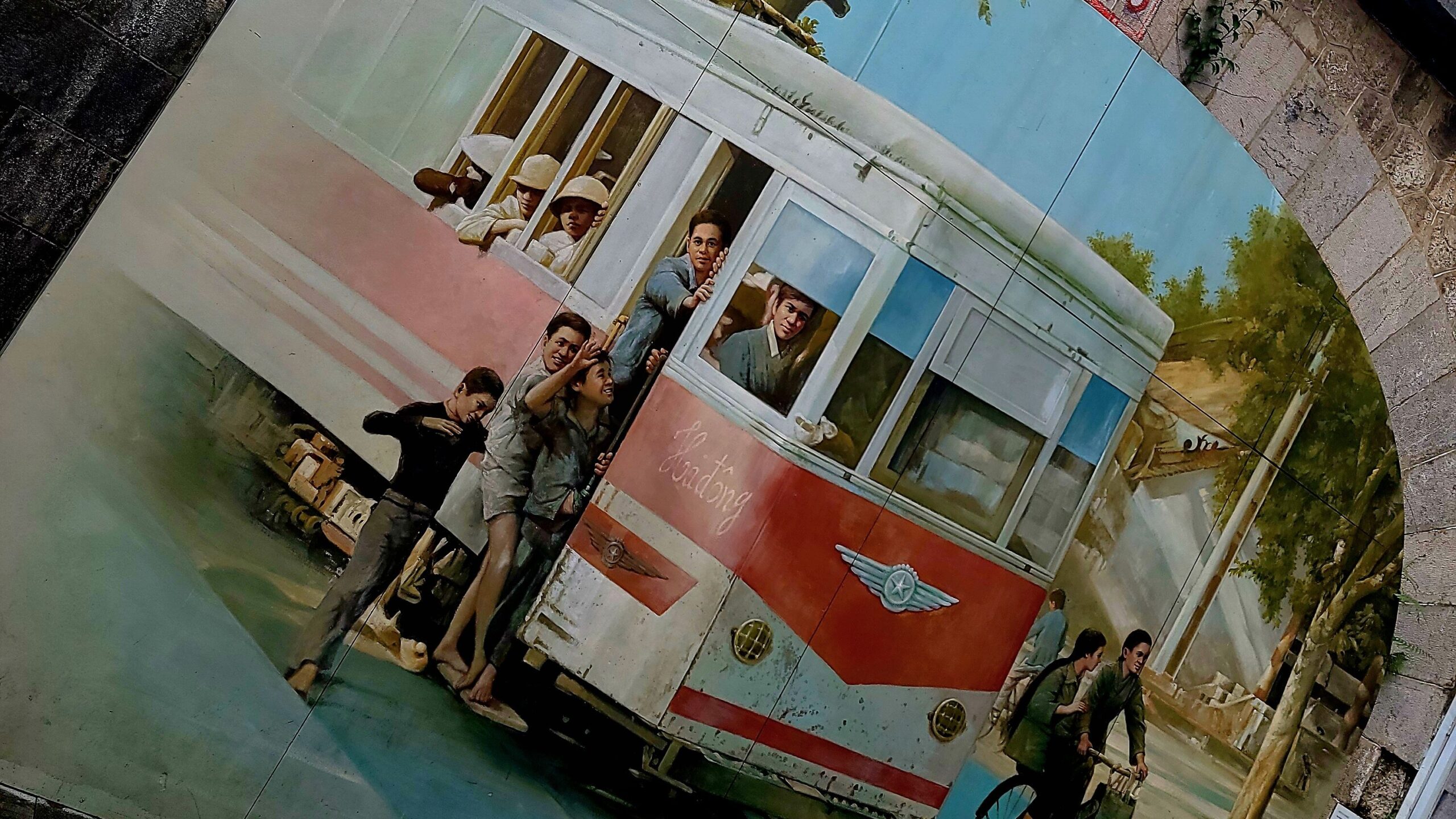
I loved the murals, temples, night markets, and independent art shops, particularly places like TiredCity that showcase Vietnamese artists. The older neighborhoods have a character that isn’t polished for the benefit of visitors, and I found that far more compelling than somewhere that looks as though it’s been scrubbed clean for a tourism brochure.
Our Hanoi food tour was one of the culinary highlights of the trip. Between the extraordinary food, the cafés, and streets that seemed to offer something interesting around every corner, I felt as though I’d barely introduced myself to the city before it was time to leave. Don’t forget to check out the 6 reasons you should take a Hanoi Food Tour, but if you’re anything like me you DO NOT need to be told.
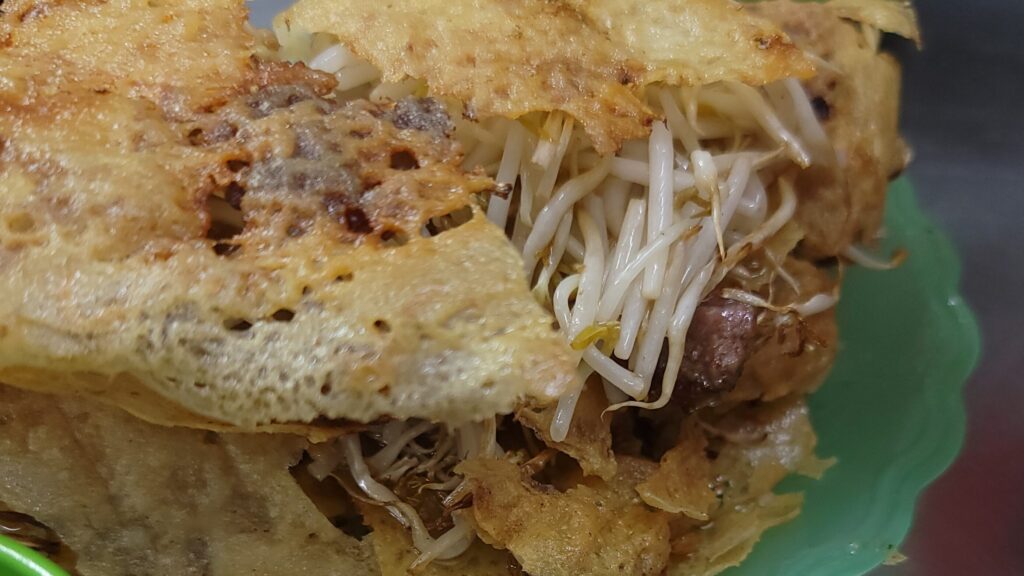
Hanoi has centuries of history, but it doesn’t feel like a city preserved for people to admire from a distance. Its historic buildings and traditions exist alongside contemporary Vietnamese life, and that combination is precisely what made me want to keep exploring.
I would have happily spent several more days there, simply exploring and seeing what I came across.
Hue and Hoi An: History Isn’t Just Something Behind a Museum Door
Hue served as Vietnam’s imperial capital under the Nguyễn dynasty, but what interested me most wasn’t simply the history preserved in its monuments. At the Imperial City, I watched Vietnamese visitors dressed in traditional áo dài photographing themselves among the historic buildings, a reminder that these places aren’t exclusively attractions for foreigners. They’re part of a cultural heritage people continue to engage with.
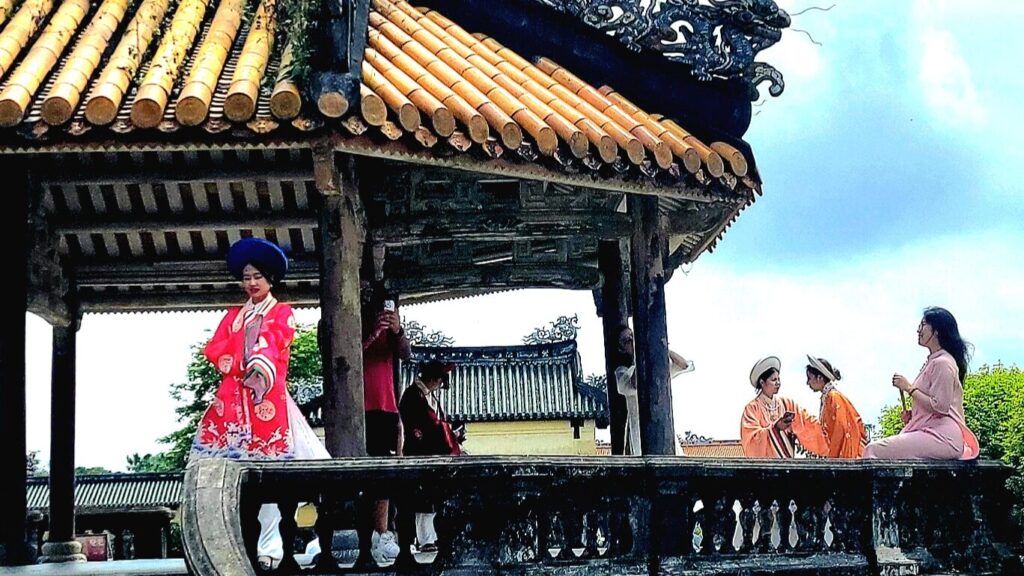
A motorcycle excursion into the countryside became one of my favorite experiences of the trip. We traveled past farms and traditional workshops, visited the historic Hổ Quyền arena where tigers and elephants were once forced to fight, and stopped at a Buddhist nunnery for a vegetarian lunch. The contrast between imperial history, religious traditions, and ordinary rural life gave me a much broader appreciation for Hue than I would have gained from visiting its major monuments alone.
That evening, I walked along the Perfume River, where the waterfront was full of music and people enjoying themselves. After a day exploring centuries of history, it was rather nice to see the city simply getting on with its evening. I could easily have spent several more days there.
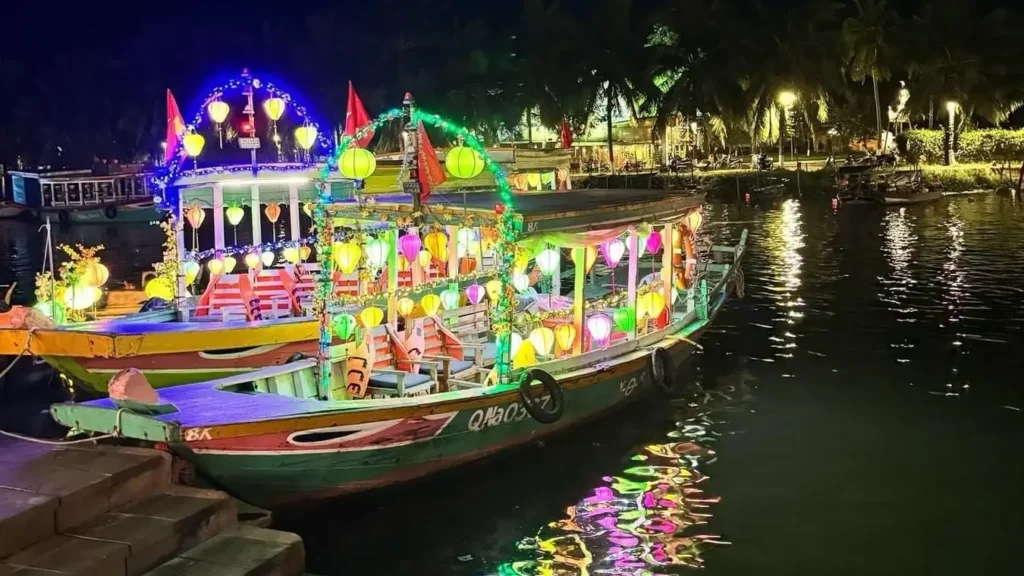
Hoi An was different again, with its yellow-painted buildings, lantern-filled streets, and beautifully preserved trading-port architecture. It’s undeniably beautiful, although its popularity means tourism is much more visible in the old town.
One of the experiences I particularly appreciated was a noodle-making class connected to Oodles of Noodles, a community initiative associated with STREETS International and supported through G Adventures’ community-tourism partnerships. STREETS provides hospitality training and employment opportunities for disadvantaged young people, and the experience allowed us to learn about Vietnamese noodles while engaging with the program’s educational mission.
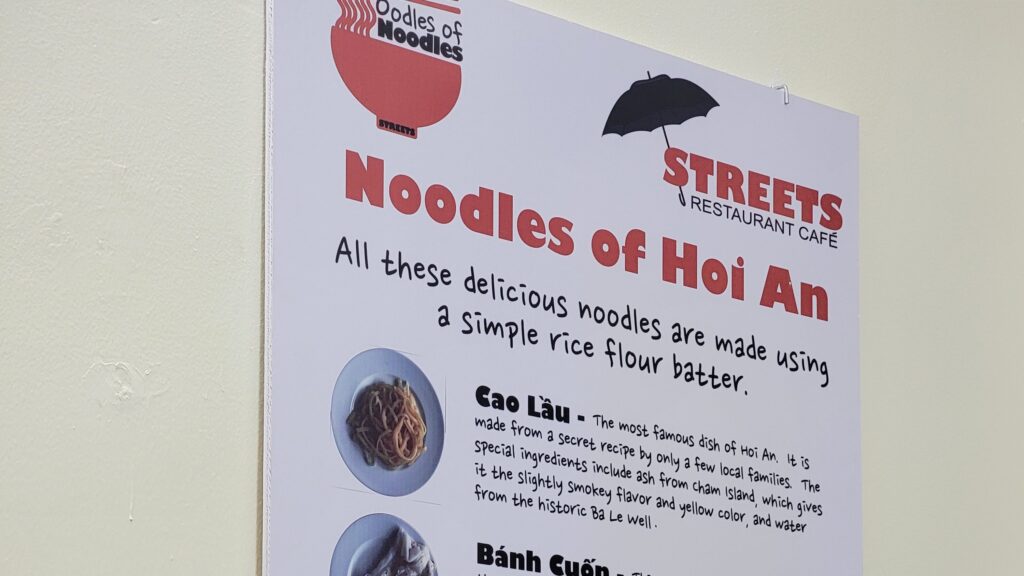
It was a reminder that tourism doesn’t have to revolve exclusively around visitors consuming an experience. When the right organizations are involved, it can also provide practical opportunities for the communities hosting them.
Saigon: A Different Expression of Modern Vietnam
Ho Chi Minh City, still widely called Saigon, felt noticeably different from Hanoi. It struck me as more cosmopolitan and commercially polished, with larger stores, recognizable international brands, and a skyline that reflected the country’s economic ambitions.
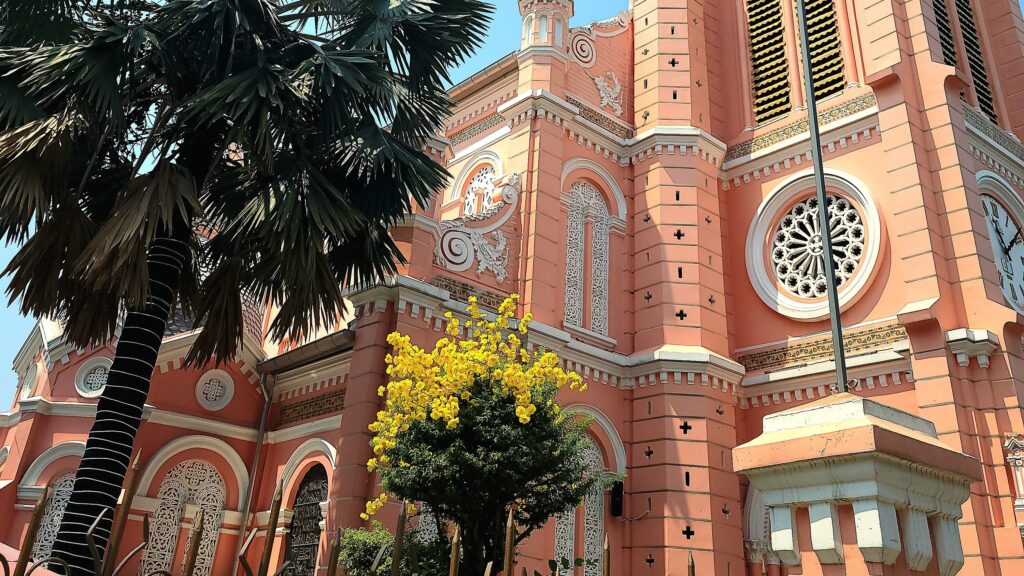
I visited the French colonial-era Central Post Office, saw the famously pink Tan Dinh Church, and explored parts of the city by motorbike, but I only had about a day and a half there. By that point in the trip, I was exhausted, and I didn’t make it to the museums or historical sites that would ordinarily have been at the top of my list.
My preference for Hanoi probably says as much about the timing of my visit as it does about either city. Saigon felt more familiar to me as a major international commercial center, but I wouldn’t pretend that such a brief introduction gave me a comprehensive understanding of it. It’s somewhere I intend to revisit properly rather than pass judgment on after thirty-six hours and an increasingly desperate desire for a comfortable hotel.
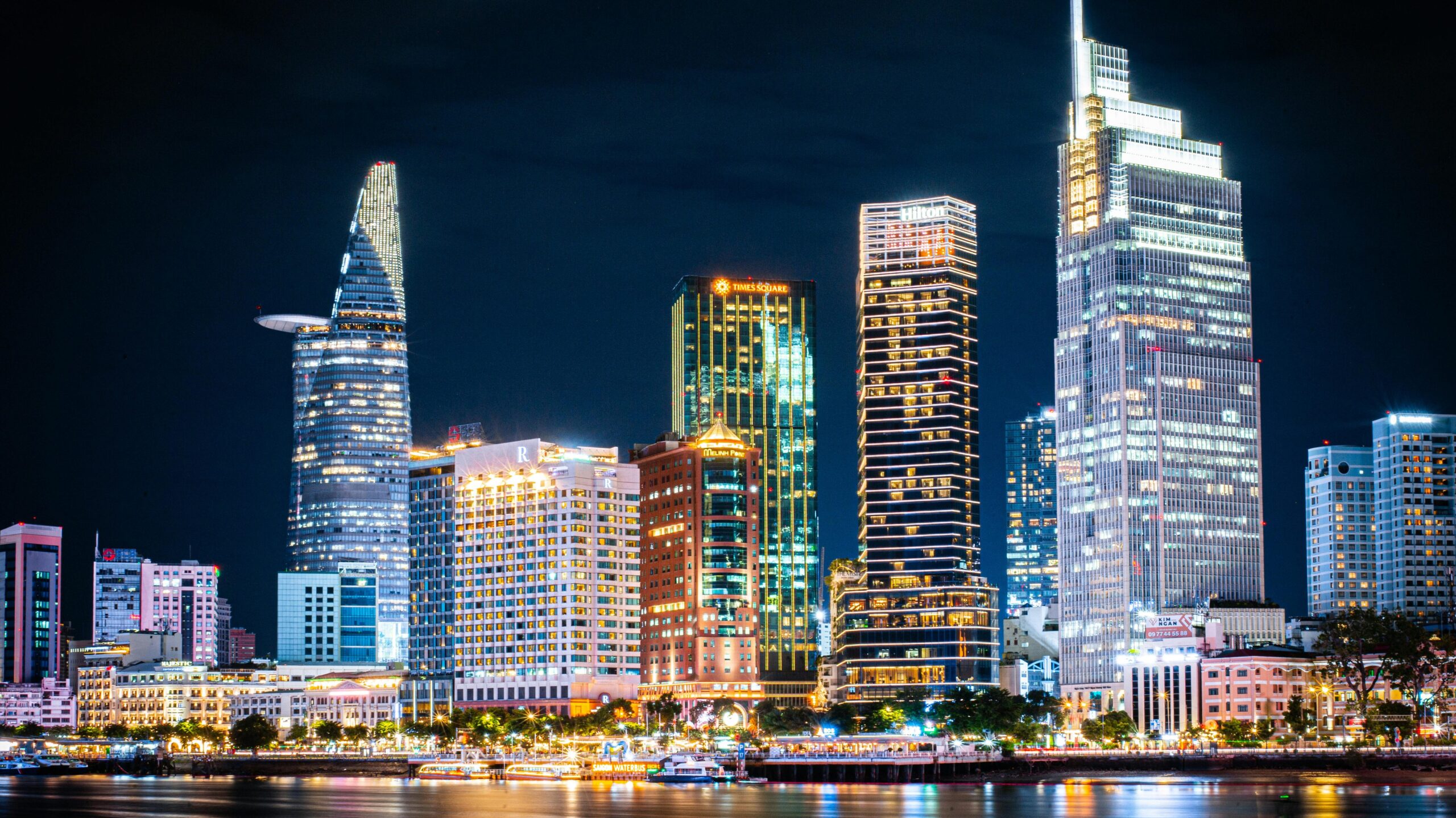
I preferred Hanoi’s gritty character, but Saigon’s commercial energy is just as much a part of contemporary Vietnam. The contrast between the two cities is a reminder that the country can’t be reduced to a single image of motorbikes, markets, or historic streets.
The Vietnam Beyond the American War
For Americans in particular, Vietnam often arrives with a historical narrative already attached. We learn about the war, its political consequences, and the enormous loss of life, usually through a perspective centered on America’s involvement.
What changed for me in Vietnam was hearing people discuss that history from their own perspective. I didn’t speak with anyone who told me they’d personally fought in the war, but several people I encountered wanted visitors to understand what had happened in their country and how their experience differed from the familiar American narrative.
I was also struck by the absence of resentment toward me for being American among the people I met. That doesn’t mean everyone in Vietnam feels the same way, but the conversations I had were more interested in understanding the past than assigning blame to someone who hadn’t been part of it.
Seeing the landscape made those conversations considerably more powerful. During our travels around Hue, we stopped at a hillside overlooking a dramatic bend in the Perfume River, where old military bunkers remained. Standing there, looking at the terrain, I began to appreciate just how difficult it must have been for American forces to operate in an environment so unfamiliar to them.
The mountains, dense vegetation, rivers, and underground military infrastructure added a physical dimension to a conflict I’d previously understood largely through books, documentaries, and American accounts. The ingenuity involved in systems such as the Củ Chi tunnels, which I learned about but didn’t personally visit, was extraordinary.
None of that means geography alone explains the war’s outcome. Military strategy, politics, local support, international involvement, and countless other factors mattered enormously. But being there helped me understand why technological superiority couldn’t simply overcome every advantage of local knowledge, adaptation, and determination.
Historically, North Vietnam achieved its military and political objectives, while the United States and South Vietnam were defeated. Yet one sentiment I heard during my visit was that nobody really wins a war. Victory doesn’t bring back the dead, undo the suffering, or erase the consequences for families and future generations.
What stayed with me was the willingness of the people I encountered to discuss that painful history while also looking toward the future. Vietnam has changed enormously since the war, and its contemporary identity encompasses far more than a conflict that Americans often treat as the defining chapter of the country’s existence.
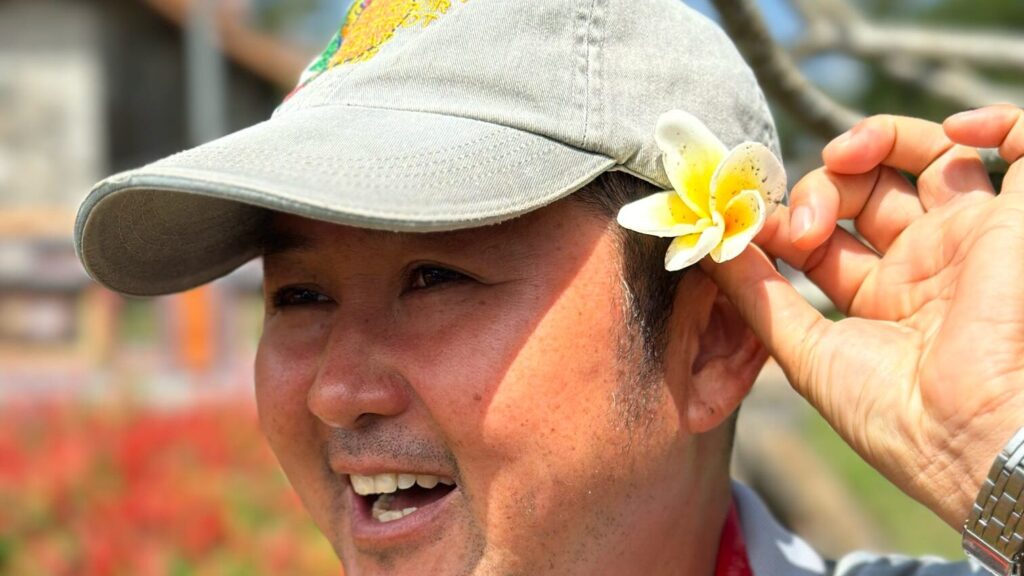
Despite our differences in history, politics, and culture, I came away recognizing how much people ultimately have in common. We may approach life differently and place different values on particular things, but wanting security, family, opportunity, and a decent future isn’t an especially foreign concept.
Vietnam didn’t give me a tidy interpretation of the war. It made me question how much of the story I’d previously understood and whose perspectives I hadn’t been hearing.
Vietnam Doesn’t Need to Make Sense on Your Terms
I didn’t love every aspect of traveling through Vietnam. The heat was relentless, some of the infrastructure took getting used to, and there were moments when the language barrier or unfamiliar conventions made ordinary things more complicated than I expected. Appreciating a country doesn’t require pretending every inconvenience is charming.
But the things that fascinated me far outweighed the frustrations. I felt comfortable exploring independently, including at night, although that doesn’t eliminate the need for sensible precautions. I’ve discussed those separately in Is Vietnam Safe for Solo Female Travelers?.
I’m going back to Vietnam. That’s not really a question anymore. I want more time in Hanoi, more time in Hue, and an opportunity to give Saigon the attention I couldn’t manage on my first visit. There are still places I want to see, conversations I want to have, and an extraordinary amount of coffee I apparently haven’t finished drinking.
Frankly, I’d go back tomorrow. I’d just prefer a temperature that didn’t make me feel like my face was melting off.