I live in Chicago. I already live in a big, scary city, according to everybody who doesn’t live here, so I didn’t arrive in South Africa particularly frightened by everything I’d read online. I’ve traveled to more than 40 countries, and one thing I’ve learned is that you’re almost always going to hear the worst stories about a place before you get there. That’s partly because terrible things make the news and ordinary Tuesday afternoons generally don’t.
That doesn’t mean those stories aren’t true. South Africa has real crime, including violent crime, and I’m not going to pretend otherwise because I had a fantastic trip. What I can tell you is what actually happened to me.
I spent my first few days in Cape Town traveling alone, then joined a group for the rest of South Africa before continuing into Zambia and Zimbabwe. I would return to nearly every place I visited in South Africa by myself without hesitation, and I fully intend to. I liked Cape Town enough that I’m half-convinced I want to live there.
There were also a couple of times, including in the middle of the day, when my gut told me something wasn’t right, so I got the fuck out of there.
That’s pretty much my first rule of solo female travel.
So, Did I Actually Feel Safe?
Based on my experience, yes, but that’s probably the least useful answer I could give you.
I would travel South Africa alone again without hesitation, but I wouldn’t travel everywhere in exactly the same way. If you’re looking for someone to stamp an entire country SAFE or UNSAFE, I’m not your girl. That’s not how cities work, countries work or, frankly, how crime works.
I live in Chicago. Someone getting shot here tonight doesn’t mean I’m afraid to walk to work tomorrow, just as spending several days alone in Cape Town without anything happening to me doesn’t prove Cape Town is perfectly safe. Both arguments are ridiculous.
South Africa does have a serious crime problem, and travelers should know that before they go. The current U.S. State Department advisory lists South Africa at Level 2: Exercise Increased Caution and cites violent crime, including robbery, carjacking and mugging. It also notes that violent crime is more common in downtown areas of major cities, particularly after dark.
That’s real information. It’s also not the entirety of what it’s like to travel through South Africa.
I spent weeks there and didn’t spend those weeks afraid. I went out alone, talked to strangers, used public transportation, wandered through museums and markets, took Ubers, walked around cities and generally lived my fucking life. I also had moments when something felt wrong and I left.
That’s the uncensored answer: South Africa didn’t scare me, but I respected it.
If you’re still figuring out the trip itself, start with my Best Places to Visit in South Africa for a First Trip. This article is about something different: what it actually felt like traveling there as a woman and what I would do again.
What Cape Town Actually Felt Like Alone
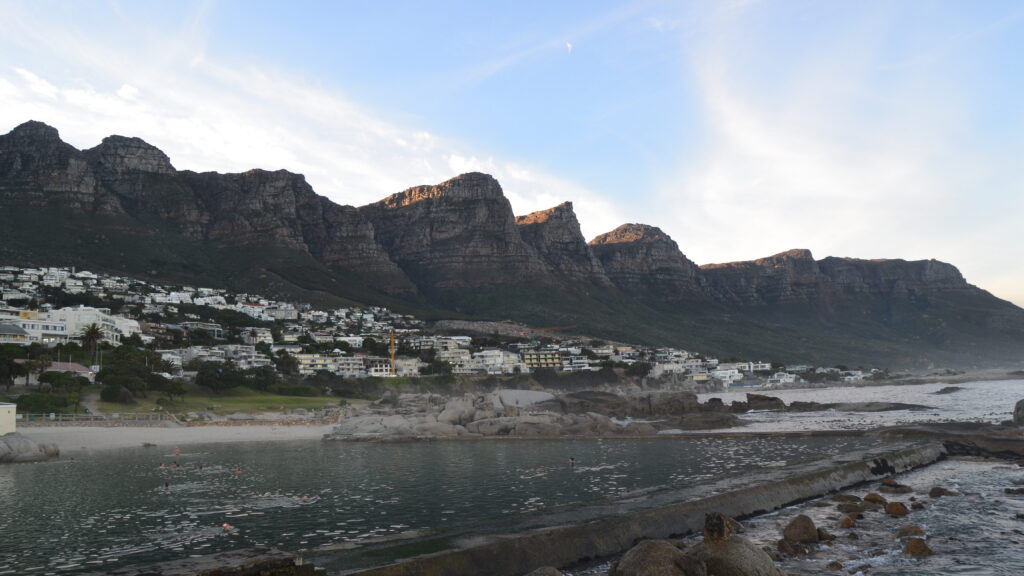
Cape Town is where I had the most experience truly traveling solo. I arrived before the rest of my group and stayed at Camps Bay Retreat for my first four days, so even though I traveled all over the city, Camps Bay was home base. I walked around there constantly, went out to dinner, used public transportation, took the hop-on hop-off bus around the city, ordered Uber or Bolt and talked to practically anyone who would talk back.
Most of the time, I felt completely comfortable, especially in Camps Bay, and something I didn’t understand until afterward is that there was actually a reason I kept seeing so many uniformed safety officers.
Camps Bay has its own City Improvement District with dedicated Public Safety Officers patrolling the neighborhood on foot during the day and at night, along with additional law-enforcement and security resources. I didn’t know any of that while I was there. I just knew there seemed to be safety officers fucking everywhere.
I’m not going to pretend I measured the distance between them, but when I was walking along the coast it felt like I came across one every few minutes. I was there long enough that I started recognizing some of the same guys. They were friendly, they’d talk to me, and more than once one of them offered to take my picture because I was obviously wandering around by myself trying to photograph everything except myself.
You can read more about the Camps Bay City Improvement District and its public-safety program.
There were still moments in Camps Bay when I felt slightly uneasy, and this is where solo travel gets complicated because I can’t tell you whether I was picking up on something legitimate or whether my brain was remembering every horrible thing I’d heard about crime in South Africa and filling in the blanks. Sometimes your gut is warning you about something. Sometimes fear is just fucking with you. The problem is you don’t get a notification telling you which one it is.
What I can say is that I never felt stranded or completely on my own there. There was a very visible safety presence around Camps Bay, and that absolutely affected how comfortable I felt walking around.
I noticed safety officers in other parts of Cape Town too, particularly along the coast and around Oranjezicht, but I didn’t personally notice that same level of visibility everywhere I went. That doesn’t mean the officers weren’t there. Cape Town’s CBD, for example, has its own City Improvement District and a substantial public-safety operation; I simply didn’t experience their presence in the same way when I was walking through the parts of downtown I visited.
And that’s where I did have a couple of moments in the middle of the day when I became uncomfortable.
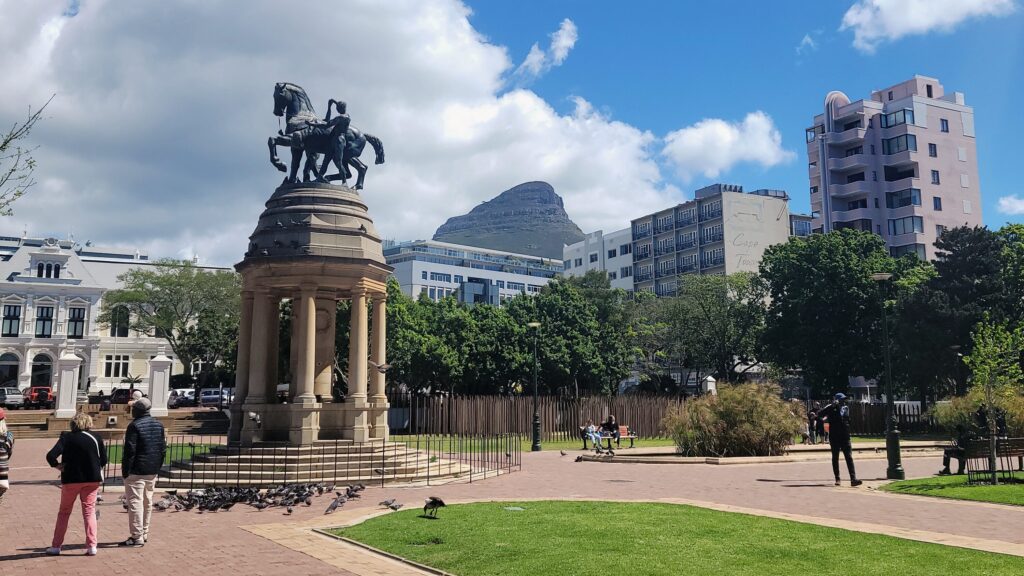
Around the CBD, Company’s Garden and some of the museums, it wasn’t because I’d wandered onto some abandoned street with tumbleweeds blowing past me. Sometimes it was exactly the opposite. It was crowded, there were people milling around, people sitting along the street and enough activity happening around me that I didn’t particularly like my position in the middle of it.
Crowded doesn’t automatically mean safer. Sometimes it means someone can get very close to you without attracting attention, and pickpocketing and cellphone theft are real concerns.
When I felt uncomfortable, I moved. Sometimes that meant going one block over or heading toward another area, but I didn’t stand there trying to determine whether my gut had produced enough supporting evidence to justify leaving.
If you’re a woman traveling alone and something feels wrong, move. Maybe nothing is wrong, maybe something is happening that has absolutely nothing to do with you, or maybe you’re completely fucking wrong. Who cares? You’re now somewhere you feel comfortable.
Cape Town also has something I didn’t know about when I was there: the Western Cape Government operates a Tourism Safety and Support program for international travelers who get into trouble. It can help with things like contacting family, logistical support, hospital assistance and coordinating with an embassy or consulate if you’ve lost your passport. It’s not a substitute for emergency services or travel insurance, but it’s exactly the kind of number I’d save in my phone before going back and hope I never need.
How I Got Around Without Acting Like an Idiot
I didn’t spend Cape Town clutching my purse and looking suspiciously at everyone around me. I used my phone, wore headphones sometimes and generally behaved like a normal person living in 2026, but I stayed aware of what was happening around me.
A few things I did consistently:
- I used Google Maps consistently. Yes, Google Maps works perfectly well in Africa. Africa is a continent, not another dimension. If you dont want to pay for international data through the nose I had data through an Airalo eSIM, which worked throughout my trip and meant I could use Maps whenever I needed it. It was no hassle, I had 5GB and it worked for a full 15 days traveling around South Africa.
- If I wore headphones, I used Ambient or Transparency mode. I do the same thing in Chicago, sometimes without even playing music, because I want to hear what’s happening around me.
- I used MyCiTi public transportation. I used it consistently when I was traveling around Cape Town alone and had no issues. I was warned before my trip to avoid the local minibus taxis, so I did.
- At night, I generally used Uber or Bolt. If I was somewhere like the V&A Waterfront, that was different, but I wasn’t walking a couple of miles through an unfamiliar part of Cape Town at night just to prove I could.
- I kept track of my shit. Phone, bag, wallet, whatever I had with me. Basic big-city rules.
- If somebody who actually lived there told me not to walk somewhere alone, I listened.
Uber and Bolt were incredibly inexpensive compared with Chicago, so if a ride costs very little and eliminates an unnecessary nighttime walk through an area I don’t know, I’m getting in the fucking car.
Although I do find the entire concept objectively hilarious because we spent our childhoods being told never get into a car with a stranger, and now one of our personal-safety strategies is essentially, This street feels sketchy; let me summon a stranger in a Toyota and get into his car.
Apparently we’ve come full circle and getting into cars with strangers is now the responsible choice.
Obviously, you still need some level of comfort and awareness before you get in and have to check the car and license plate to make sure you’re getting into the correct vehicle, don’t turn off your brain simply because an app assigned the stranger a star rating. My point is that I felt far more comfortable taking a short Uber or Bolt than unnecessarily walking through an unfamiliar area at night.
I also wasn’t walking around completely oblivious because I had Google Maps in my hand or headphones in my ears. The Western Cape Government specifically advises pedestrians to keep their attention off their phones while walking near traffic and to turn down or remove earphones when crossing roads.
Woodstock Is Why I Believe in Local Knowledge
Woodstock was one of my favorite experiences in Cape Town, and I wouldn’t have wandered around all of it by myself.
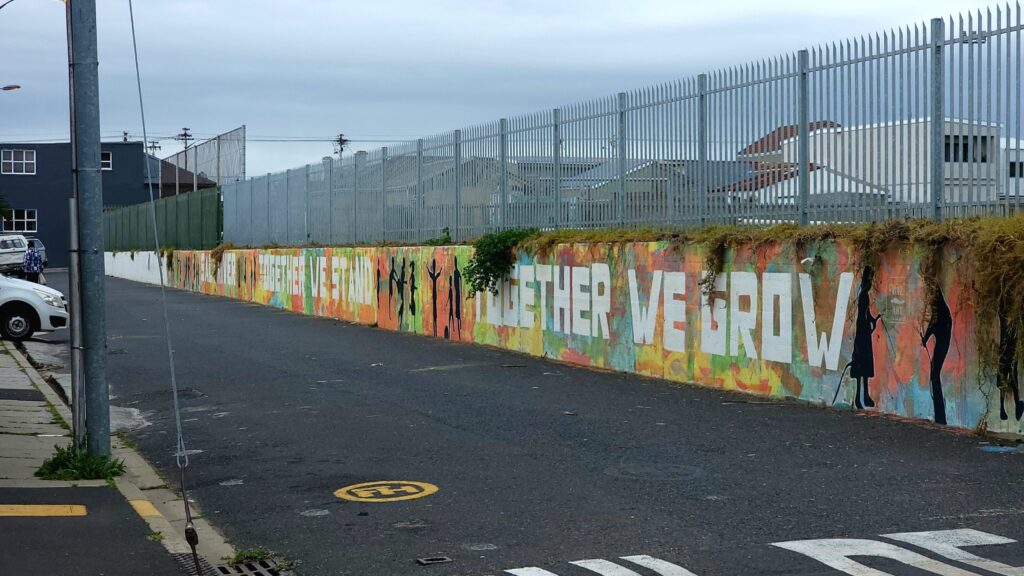
I’m a street-art fanatic, so I booked a tour with Diego and immediately started asking approximately 9,000 questions. He realized pretty quickly that I already knew quite a bit about street art, and what should have been a fairly standard tour turned into something much more personal. He took me into areas he didn’t normally include, explained the artists, politics, displacement and neighborhood history, and eventually it felt considerably more like walking around with a friend than being on a tour.
There were places where I felt perfectly comfortable and others where I was very aware that I was an outsider. Diego also took me into one particular section and told me directly that I should not come back there by myself, so I wasn’t going to. I don’t confuse solo travel with having something to prove; I can look at a mural by myself, but I wanted to know why it was there.
That applies to safety too. I talked constantly with Uber drivers, vendors, guides and people I met at markets. Some conversations were about food and neighborhoods, while others went into race, inequality, government and South African history. I didn’t assume everything one person told me represented an entire country, but when people who actually live somewhere tell me how they move through their own city, I pay attention.
Being allowed to go somewhere doesn’t mean you’re entitled to move through it however the hell you want.
I Wasn’t Solo for the Entire Trip
The Garden Route is where solo women exhale. Forests, lagoons, and small towns create a stretch of coastline After Cape Town I joined a group, and that distinction matters because I’m not going to pretend I independently road-tripped across South Africa when I didn’t. My hotels and transportation for much of the rest of the trip were arranged for me.
I do travel alone extensively, though, and there wasn’t anywhere we went along the Garden Route where I thought, Absolutely not, I wouldn’t come back here by myself. Quite the opposite; I fully intend to return, and eventually I plan to bring my own groups of women back to South Africa.
Hermanus, Wilderness, Plettenberg Bay and the other coastal areas felt much more like smaller vacation towns to me than major urban environments. In Hermanus we walked around, went out at night, ate dinner and got very happily tipsy at local wine bars, and I felt completely comfortable. Wilderness wasn’t much of a test of walking around town because we were staying out in the actual wilderness, kayaking and hiking to waterfalls.

That doesn’t mean common sense suddenly becomes optional because there’s an ocean nearby. Don’t leave valuables sitting visibly in your car, don’t abandon your phone somewhere because the view is pretty, and keep doing the same things you’d do at home. Based on my experience, I would have no problem returning to those places alone.
If You’re Driving Yourself, Know About the Roadblocks
As we traveled between different areas, we encountered roadblocks and vehicle checkpoints where vehicles were stopped and things like seatbelts, documentation and road-safety compliance were checked. Some of them did not look the way my American brain expects a police checkpoint to look, and had I been driving alone without knowing they were legitimate, I probably would have thought, What the fuck is happening?
They’re real.
Western Cape Provincial Traffic Services regularly conduct roadblocks and vehicle checkpoints. During one week in April 2026, provincial officers stopped more than 30,000 vehicles during enforcement operations, while another major operation in early 2026 included 180 roadblocks, vehicle checkpoints and speed-control operations involving more than 36,000 vehicles.
The province’s Easter 2026 road-safety operations also included private vehicles, buses and cross-border vehicles, with checks involving vehicle roadworthiness, driver fitness and permits.
That doesn’t mean you blindly trust any random person who puts a cone in the road. You’re still responsible for paying attention to what’s happening around you, but knowing that these checkpoints are a normal part of traffic enforcement makes encountering one considerably less alarming.
If you’re planning to drive yourself, the Western Cape Government’s Safely Home road-safety information is worth reading before you pick up the rental car.
Johannesburg Was Where I Made a Different Decision
Johannesburg was the exception for me.
I actually wanted to go into the city because there were museums I wanted to see. Before I went, however, a close friend told me about people he personally knew who had been killed there while traveling for work. Then coworkers warned me, people I met in Cape Town warned me and our guide told me very clearly not to explore Johannesburg alone.
At some point I’m going to listen to the fucking chorus.
During my two overnight stops, I stayed around the airport. At the first hotel, the security instructions inside the room were very explicit about locking the door and not opening it for people you didn’t know, which wasn’t exactly encouraging me to rethink my decision.
There is objective context for some of those concerns. The U.S. State Department specifically reports that crime victims have been followed from OR Tambo International Airport in Johannesburg and robbed after reaching their home or hotel.
I’m still not going to tell women, “Never go to Johannesburg,” because I haven’t properly explored Johannesburg myself, and I’m not reviewing a city I haven’t experienced. I actually intend to go, but one of the people I became friends with during my travels now lives there and knows the city extremely well, so when I finally visit Johannesburg, I’ll have him help me plan it and make sure I am never without actual armed security. Yes, you actually have to do that.
I’m perfectly capable of traveling alone without pretending that means I know everything about everywhere.
Safari Was a Completely Different Safety Calculation
Once I reached the private reserve, I wasn’t thinking about solo-female safety at all. We were picked up, stayed on the reserve and operated within the lodge environment, so I felt completely comfortable. I also had one of the best massages of my life, which seems important to this safety discussion because I was extremely relaxed.
My primary safety concern was that there were literal fucking lions outside waiting to potentially have me for dinner if they mistook me for the McDonald’s of the safari.

After dark we were escorted back to our rooms, and I happily followed that rule because feminism does not require me to be eaten by a lion.
You can read more about where safari fits into the trip in my South Africa first-trip guide, and eventually safari is getting its own article because I came home with considerably more to say about hyenas, lions and animal poo than any reasonable person probably should.
My Solo Female Travel Rules for South Africa
So here are my final ‘rules’ for you. These aren’t commandments, and they’re not based on pretending that my experience will automatically be yours. They’re simply the things I would do again:
- Trust your gut. If something feels wrong, move. You don’t need to establish probable cause first.
- Use Uber, Bolt or another established ride service when walking doesn’t make sense, particularly after dark.
- Pay attention to your phone without disappearing into it. Google Maps is useful; walking around oblivious isn’t.
- If you wear headphones, keep outside sound on.
- Don’t leave valuables visible in a rental car.
- Ask locals whether somewhere makes sense to walk. Google Maps knows how to get you somewhere; it doesn’t necessarily understand what happens on every block between you and your destination.
- If you’re driving, learn about roadblocks and checkpoints before you encounter one.
- Use a guide when local knowledge adds something. Sometimes that’s safety, sometimes it’s history, and sometimes it’s simply understanding what the hell you’re looking at.
- Don’t let somebody else’s horror story stop you from traveling, but don’t let somebody else’s “I felt completely safe!” convince you to ignore your own surroundings either.
While the Western Cape’s Tourism Safety and Support unit also provides assistance to international tourists in distress, including help contacting family, coordinating logistics and liaising with embassies and consulates as an American I’d also bookmark the U.S. State Department’s South Africa travel information and check it again shortly before leaving, because advisories can change.
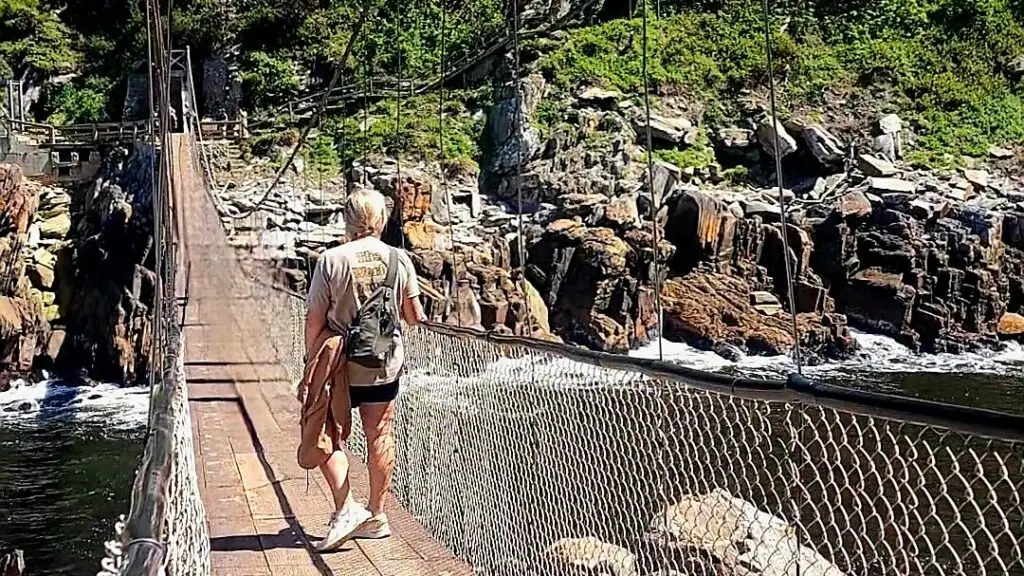
Would I Do It Again? In a Fucking Heartbeat.
I’d return to Cape Town, the Winelands, Hermanus, Wilderness, Plettenberg Bay, the Garden Route and safari alone. I liked Cape Town enough that I’m half-convinced I want to live there, and eventually I intend to bring my own groups of women back because South Africa is somewhere I want to spend considerably more time, not somewhere I came home relieved to have survived.
I would just travel differently depending on where I was, because being willing to go somewhere and being stupid about how you move through it are two entirely different things.
That’s really my answer to whether South Africa is safe for solo female travelers. Don’t ask me, or anyone else on the internet, to declare an entire country safe or unsafe for you. Learn where you’re going, listen to people who actually live there, pay attention to what’s happening around you and, if your gut starts screaming at you, get the fuck out of there. Maybe nothing would have happened, but who cares? You’re traveling alone; you don’t owe anybody the opportunity to find out.
If you’re planning the actual trip, read The Best Places to Visit in South Africa for a First Trip. For the part of South Africa I realized I hadn’t understood nearly well enough before going, read What Everyone Gets Wrong About South Africa.