Before heading to Zambia and Zimbabwe, I decided to apply for my KAZA Univisa online because I couldn’t get a straight answer about whether I could obtain one when I arrived. I was planning to visit Victoria Falls from both sides, spend a day in Botswana at Chobe National Park, and generally move between countries without turning every border crossing into a new immigration application. Getting the visa sorted before leaving Chicago seemed like the responsible thing to do.
Then I opened the application and discovered that my little $50 tourist visa apparently required a certified copy of my passport, flight documentation, and a letter addressed to the Director of Immigration. I wasn’t applying for permanent residency or seeking a personal audience with the president. I wanted to see a waterfall and some elephants, and somehow this had escalated into formal correspondence with the Zambian government.
After considerably more research than a $50 visa should reasonably require, I finally found someone who confirmed that I could get the KAZA Univisa on arrival at Livingstone Airport. I abandoned the online application, crossed my fingers, and hoped I hadn’t just made an incredibly stupid decision.
As it turned out, getting the visa was probably the easiest part of my entire Zambia and Zimbabwe experience. The border crossings, on the other hand, introduced me to a whole new category of travel logistics, including two drivers, an unexpected ATM excursion, and the possibility of spending the night in the wrong country.
What Exactly Is the KAZA Univisa?
The KAZA Univisa is a joint tourist visa that allows eligible travelers to enter Zambia and Zimbabwe multiple times for up to 30 days. It costs US$50 and also accommodates qualifying day trips into Botswana through the Kazungula border, making it particularly useful for anyone visiting Victoria Falls who wants to explore both countries and perhaps add Chobe National Park to the itinerary.
Despite the name, it isn’t a visa for the entire Kavango Zambezi Transfrontier Conservation Area, which spans Angola, Botswana, Namibia, Zambia, and Zimbabwe. The visa arrangement currently covers Zambia and Zimbabwe, with that specific provision for Botswana day trips. You’re not buying unlimited access to five countries for fifty bucks, although I certainly wouldn’t object if someone wanted to introduce that policy.
Whether it’s worth purchasing depends on your nationality and itinerary. Americans can generally visit Zambia for tourism without paying for a standard tourist visa, so if you’re only visiting Zambia, there’s no reason to spend $50 unnecessarily. Even if you’re crossing into Zimbabwe just once, it’s worth comparing the cost of a single-entry Zimbabwe visa before deciding. For my trip, however, I wanted the flexibility to move between the two countries, with Botswana thrown into the mix, and the Univisa made sense.
The official rules also specify which nationalities qualify and which entry points issue the visa. Before traveling, check the Zambia Department of Immigration’s KAZA Univisa page, particularly if you’re planning to arrive somewhere other than Livingstone or Victoria Falls.
Getting the KAZA Univisa at Livingstone Airport
When I landed at Harry Mwaanga Nkumbula International Airport in Livingstone, there was a lot happening. The president was expected later that day for a government event involving local traditional leaders, and outside the airport there were crowds of supporters waiting for his arrival. It was quite an introduction to Zambia, especially after all the uncertainty I’d had about simply getting into the country.
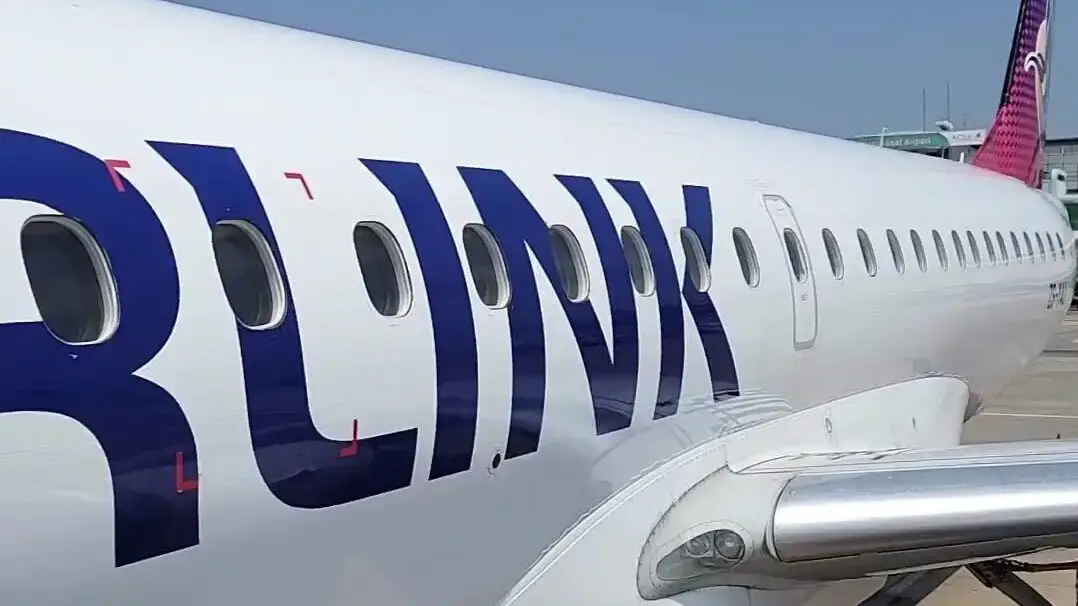
Inside immigration, however, I had a different problem. There were several queues, very little useful signage, and no obvious indication of where someone wanting a KAZA Univisa was supposed to go. Rather than joining one of the long lines and hoping for the best, I asked someone.
The KAZA queue was over on the far left, and remarkably, there were only about two people waiting. Meanwhile, the other immigration lines were packed. I couldn’t help wondering how many people standing in those queues might have qualified for the same visa but had no idea where to ask for it.
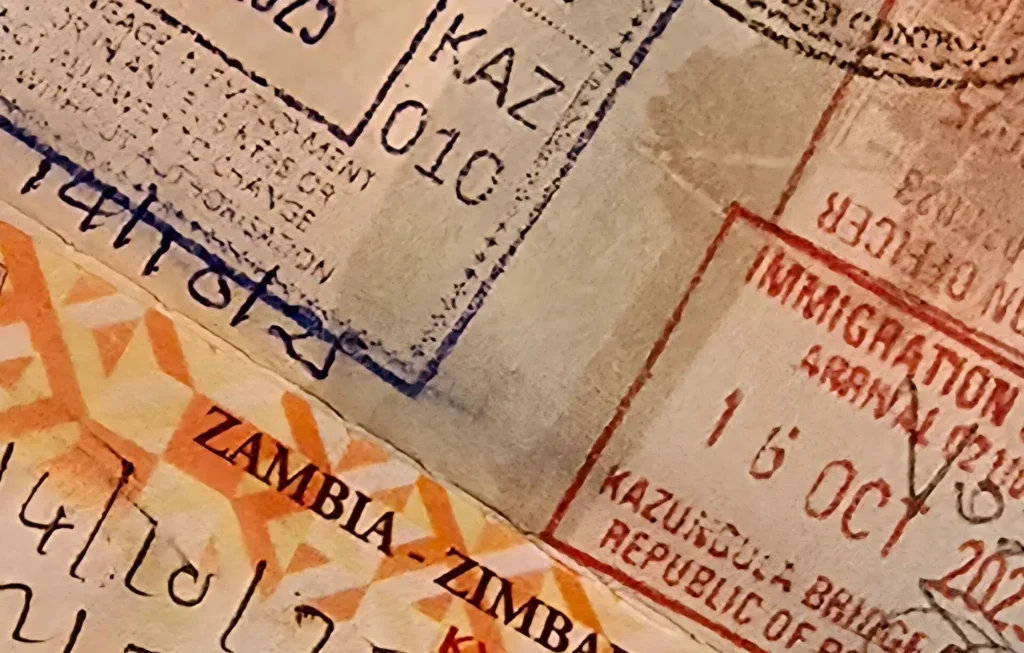
Once I reached the counter, I requested the KAZA Univisa, answered a few basic questions, paid my $50 by card, and received the sticker in my passport. The entire process took approximately five minutes, with no certified passport copy, no additional photograph, and thankfully, no letter to anyone in government.
After all that online nonsense, I was through immigration before I’d had much opportunity to be irritated by it.
My advice is to ask specifically for the KAZA Univisa as soon as you arrive rather than assuming every immigration queue handles the same applications. I found the process extremely straightforward once I was standing in the correct line, although that was my experience at Livingstone Airport, not a promise that every arrival will be identical. I would also have U.S. dollars available as a backup, since being able to pay by card at my counter doesn’t guarantee that every border post will have the same payment arrangements.
There are also actual passport requirements worth knowing before you leave home. Zambia’s Department of Immigration specifies at least six months of passport validity from your date of entry and three full blank pages. The Univisa itself is issued as a full-page sticker, so you’ll need room for that as well as your entry and exit stamps. If you’re visiting Zimbabwe and Botswana, check their passport requirements too, rather than assuming that meeting Zambia’s rules automatically covers the entire trip.
The U.S. State Department’s Zambia travel information is another useful reference for American travelers, particularly when it comes to passport validity and entry requirements.
Crossing Between Zambia and Zimbabwe
I hadn’t booked every excursion before arriving in Livingstone, partly because I’d just spent several weeks traveling through South Africa and partly because I wanted some flexibility. I figured I’d sort things out once I arrived, which turned out to be a better decision than booking through the tour desk at my hotel. The Radisson itself was beautiful, but the tour company there was neither particularly friendly nor helpful, and I wasn’t about to reward that with my money.
Fortunately, I’d met a local driver through my airport transfer who connected me with a company that could arrange my excursions and onward transportation to Zimbabwe. I ended up using them throughout my stay, often with the same driver, and we’ve remained friends. Those relationships have also given me direct contacts in the region, which is particularly useful now that I’m designing trips for other people.
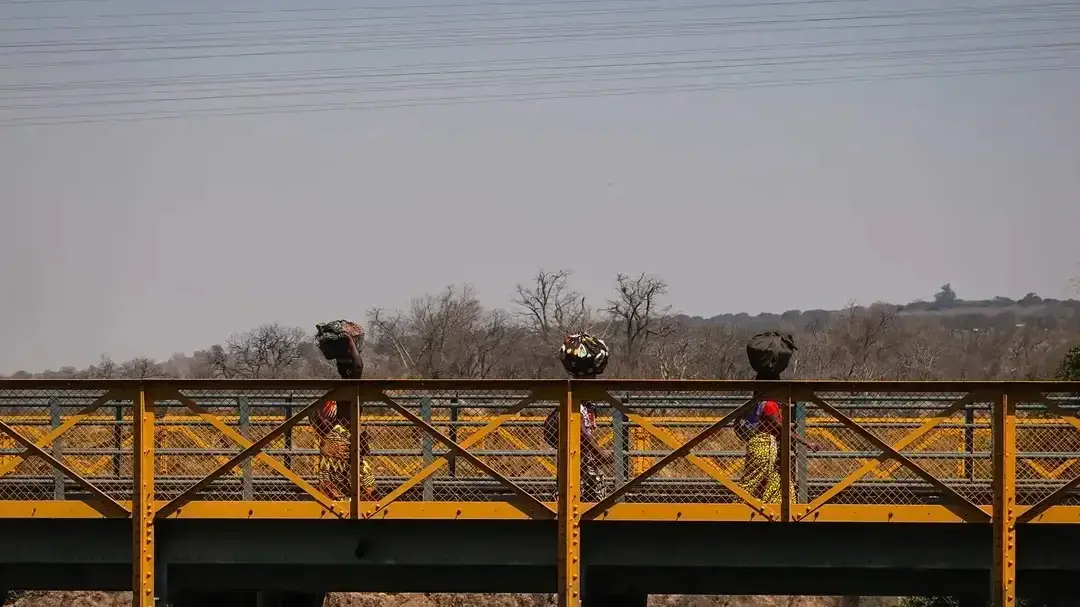
On the morning of my Chobe excursion, my driver arrived in a tiny Mazda sports car because I was his only passenger. There I was, being chauffeured across Zambia in my own private sports car, feeling considerably more important than the circumstances warranted. Not exactly the safari transport I’d imagined, but I certainly wasn’t complaining.
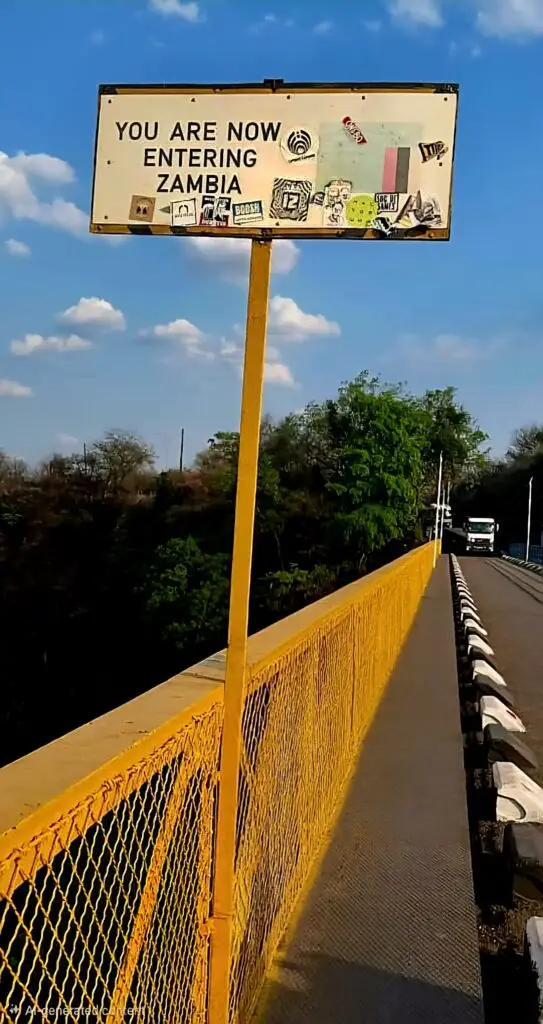
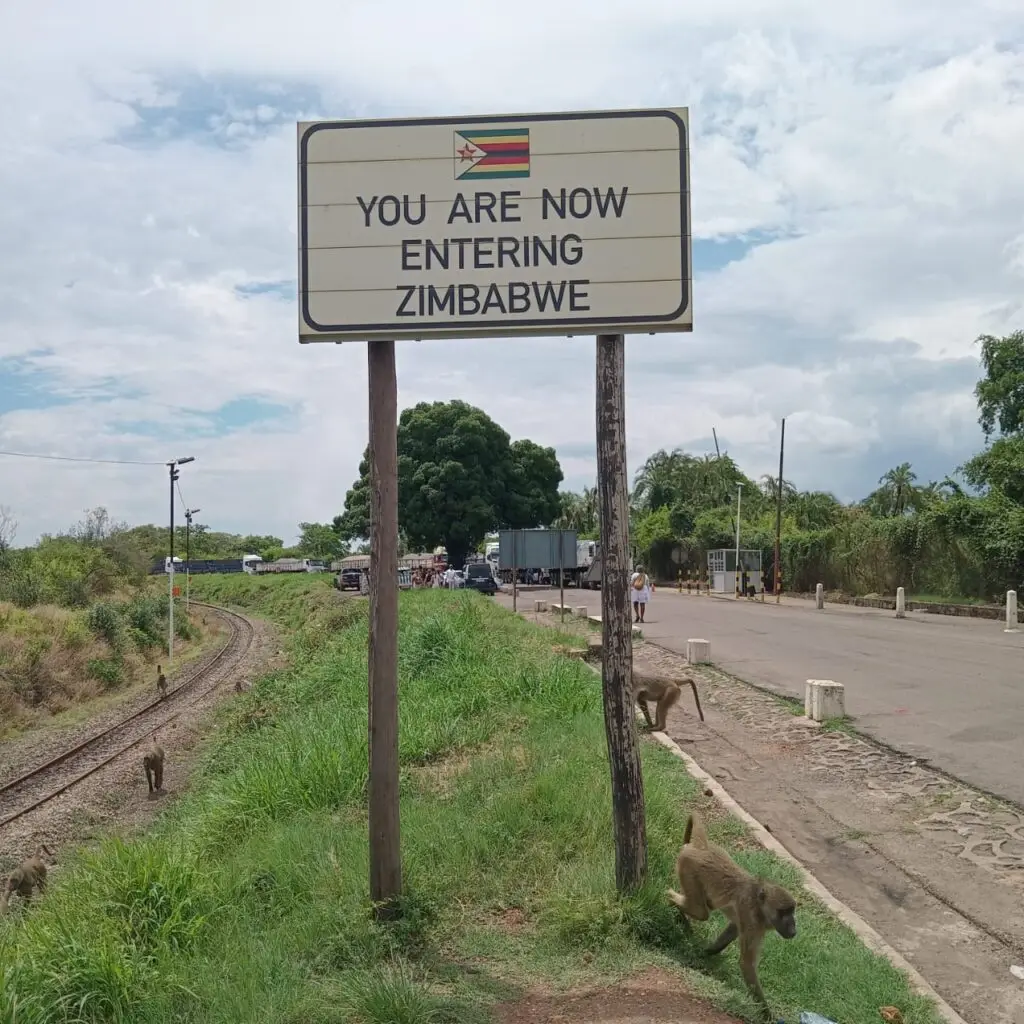
What I hadn’t anticipated was how valuable those local contacts would become once I started crossing borders. The KAZA Univisa handles the visa arrangement, but it doesn’t eliminate immigration formalities, confusing signage, or the additional procedures involved when a vehicle crosses with you. When my driver took me across into Zimbabwe for my onward flight, he had to register his vehicle as part of the crossing process, something we hadn’t needed to deal with when I was simply dropped off at the border and collected by another driver for my Boma dinner. There were also people approaching travelers to sell things, procedures that weren’t immediately obvious, and a luggage inspection setup that looked like it had survived several decades without anyone questioning whether it still worked.
Could I have navigated it independently? Probably. But I’m a woman traveling solo, and having someone who knew exactly where to go, what needed to happen, and who was collecting me on the other side made the experience considerably easier. I have absolutely nothing to prove by turning an international border crossing into an unnecessary personal challenge.
Botswana: Chobe National Park and the Shoe Situation
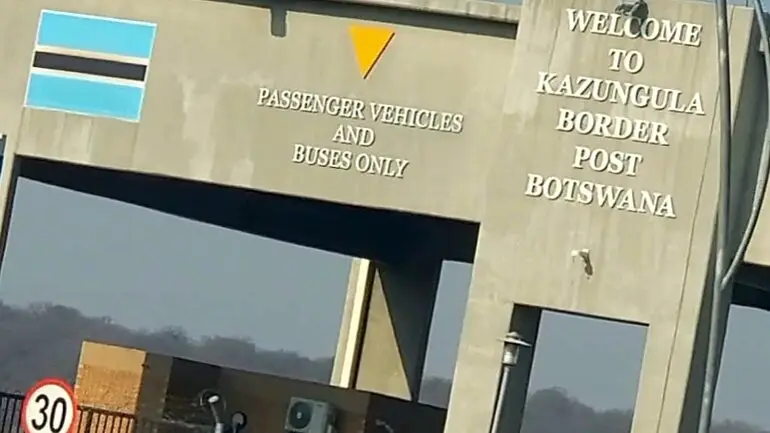
My day trip to Chobe National Park took me through the Kazungula border into Botswana, where immigration had a few surprises of its own. In addition to the usual passport formalities, I had my temperature checked both entering and leaving the country, and I had to disinfect my shoes.
Botswana has biosecurity procedures designed to help prevent the spread of animal diseases, including foot-and-mouth disease, which makes sense given the importance of livestock and wildlife in the region. It was still a first for me, and apparently my footwear required considerably more scrutiny than I’d anticipated.
If you’re planning to stay overnight in Botswana, be aware that you may be asked to disinfect all the shoes in your luggage, not just the pair you’re wearing. That’s worth knowing before you arrive with a suitcase full of footwear buried beneath everything else you packed. The temperature checks were part of my experience, but screening procedures can change, so confirm current requirements before traveling.
The other important distinction is that the KAZA Univisa accommodates qualifying day trips into Botswana through Kazungula while allowing you to return to Zambia or Zimbabwe under the visa arrangement. It isn’t a Botswana visa, and an overnight stay falls outside that specific day-trip provision. Check Botswana’s official visa requirements if you’re planning to stay longer.
Zimbabwe: Dinner, Dollars, and an International Deadline
One evening, I decided to attend a traditional Boma dinner on the Zimbabwean side of Victoria Falls because I’d been told it was the better cultural experience. What I hadn’t fully considered was that going out for dinner in another country required a little more planning than making a reservation.
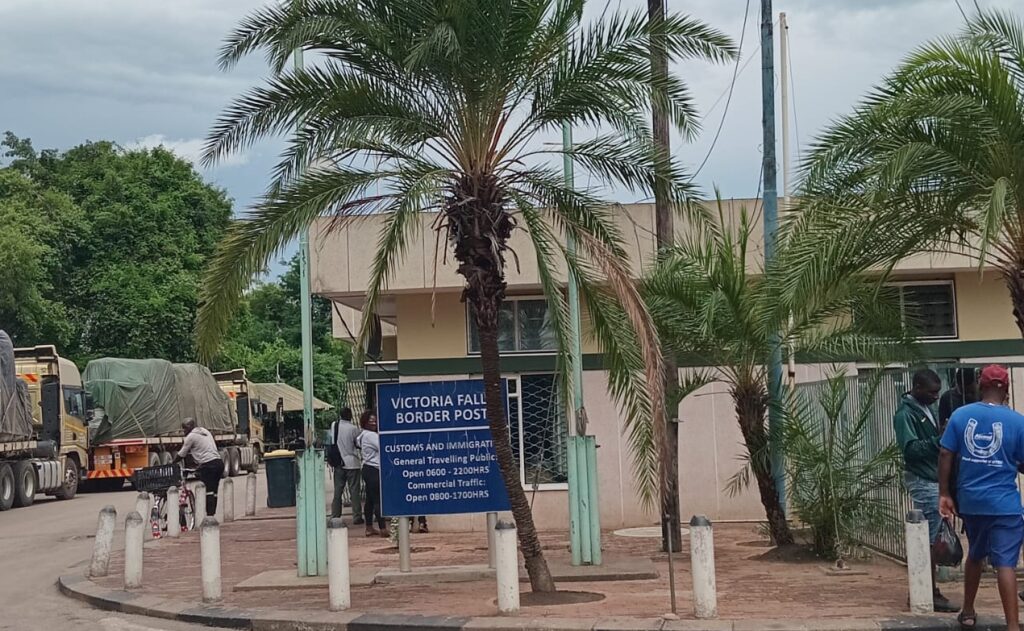
My transportation involved a driver on each side of the border, immigration formalities, and a trip across the Victoria Falls Bridge. At the time of my visit, the crossing closed at nine, which meant I needed to be back before then or risk spending the night in Zimbabwe while my hotel and belongings remained in Zambia.
I had gone out for dinner, not to accidentally relocate to another country.
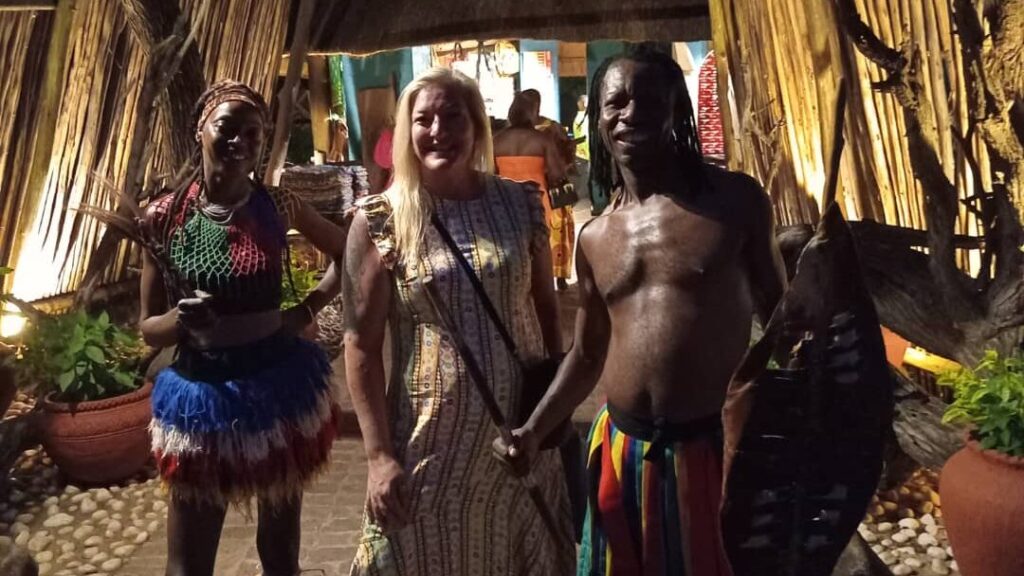
The Victoria Falls border post has since moved to 24-hour operations, so the closing time I encountered is no longer the current rule. Nevertheless, if you’re arranging an evening excursion across the border, confirm your transportation and return arrangements rather than assuming everything will work itself out.
There was also the matter of cash. I’d been withdrawing Zambian kwacha, which wasn’t especially useful when I needed U.S. dollars for Zimbabwe and tips. I ended up making an unexpected ATM stop during my evening excursion, which was one more logistical complication I hadn’t anticipated when I decided to go out for dinner.
U.S. dollars are widely used in Zimbabwe, particularly for tourism, so I’d recommend bringing clean bills in smaller denominations, especially $1, $5, $10, and $20 notes. Don’t assume every ATM will dispense U.S. currency or that getting change for larger bills will be straightforward. The U.S. State Department’s Zimbabwe travel information is worth reviewing before you go.
Between the immigration procedures, the bridge, the cash situation, and the possibility of being stranded on the wrong side of the border, I was particularly glad I’d arranged the evening through people who knew what they were doing. There’s a difference between being an independent traveler and insisting on making your own life unnecessarily difficult.
Would I Recommend the KAZA Univisa?
For my itinerary, absolutely. It allowed me to explore both sides of Victoria Falls, visit Chobe National Park, and move between Zambia and Zimbabwe without repeatedly purchasing visas. The visa itself was the easy part, which is rather ironic considering how much time I’d wasted trying to obtain it online.
The more valuable lesson was that having reliable local contacts made navigating the region considerably easier. I’m perfectly capable of traveling independently, but when you’re dealing with multiple border crossings, unfamiliar procedures, and transportation arrangements across countries, hire someone who knows what the hell they’re doing. It’s money well spent, particularly if you’re traveling solo.
I’ve maintained my contacts in Zambia and Zimbabwe, and I now work with people on the ground when designing trips for clients. If you’re planning to visit Victoria Falls, Chobe National Park, or the surrounding region, I can help put together an itinerary that makes sense and connect you with people who actually know the area.
You can learn more about my travel-design services or contact me to discuss your trip.
As for the KAZA Univisa, I’d happily pay the $50 again. I would, however, skip the letter to the Director of Immigration.