A timing-based Mont Saint Michel guide based on what actually matters, when to arrive, and why the overnight stay changes the entire experience.
Mont Saint Michel is not hard. People just behave like it is. They panic‑plan, overpack, drag luggage across medieval stone like they’re reenacting a punishment ritual, and then wonder why the day feels long. The island is not the problem. The decisions are.
If you’re reading this, you’ve already decided your version of Mont Saint Michel does not involve a rushed day trip, a tour bus, or being herded across Normandy on someone else’s timeline. You want the real version — the one you do yourself, correctly, without chaos.
Most people think Mont Saint Michel is about the island. It’s actually about timing. If you haven’t read why most visits to Mont-Saint-Michel feel rushed or disappointing in the first place, start here first.
How to Get to Mont Saint Michel from Paris (Without Losing Half Your Day)
You are not going straight from Paris to the island.
My route from Paris was:
Paris → Rennes → Pontorson → shuttle → island
That’s the chain I used, and it worked.
If someone tells you otherwise, they either booked the wrong train or they’re about to spend two hours transferring between buses trying to fix it. And yes, the island is called the Rock, which sounds like a Nicolas Cage situation but unfortunately involves fewer helicopters.
If you’re driving, the logic is the same. You still funnel through the mainland access zone. You cannot drive onto the Rock. You park and continue by shuttle or on foot.
Why Pontorson Matters
Rennes gets you into the region.
Pontorson gets you to the island.
Pontorson gets you into the Mont Saint-Michel transport system. From there, you connect toward the mainland visitor area, where the free Le Passeur shuttle takes you to the Mont.
If you’re driving, this is also where the system starts behaving like a parking garage disguised as a medieval pilgrimage route. There’s a literal gate controlling entry into the zone. When it jams — which it does — everything behind it stops. I’ve watched the entire line freeze because one barrier malfunctioned and only one person was on duty to fix it.
If you’re catching a return train, build in buffer time. That gate is the only place where a real bottleneck happens.
The Route I Used (Both Directions)
Paris Montparnasse → Rennes → Pontorson → shuttle → island
Book it on SNCF Connect.
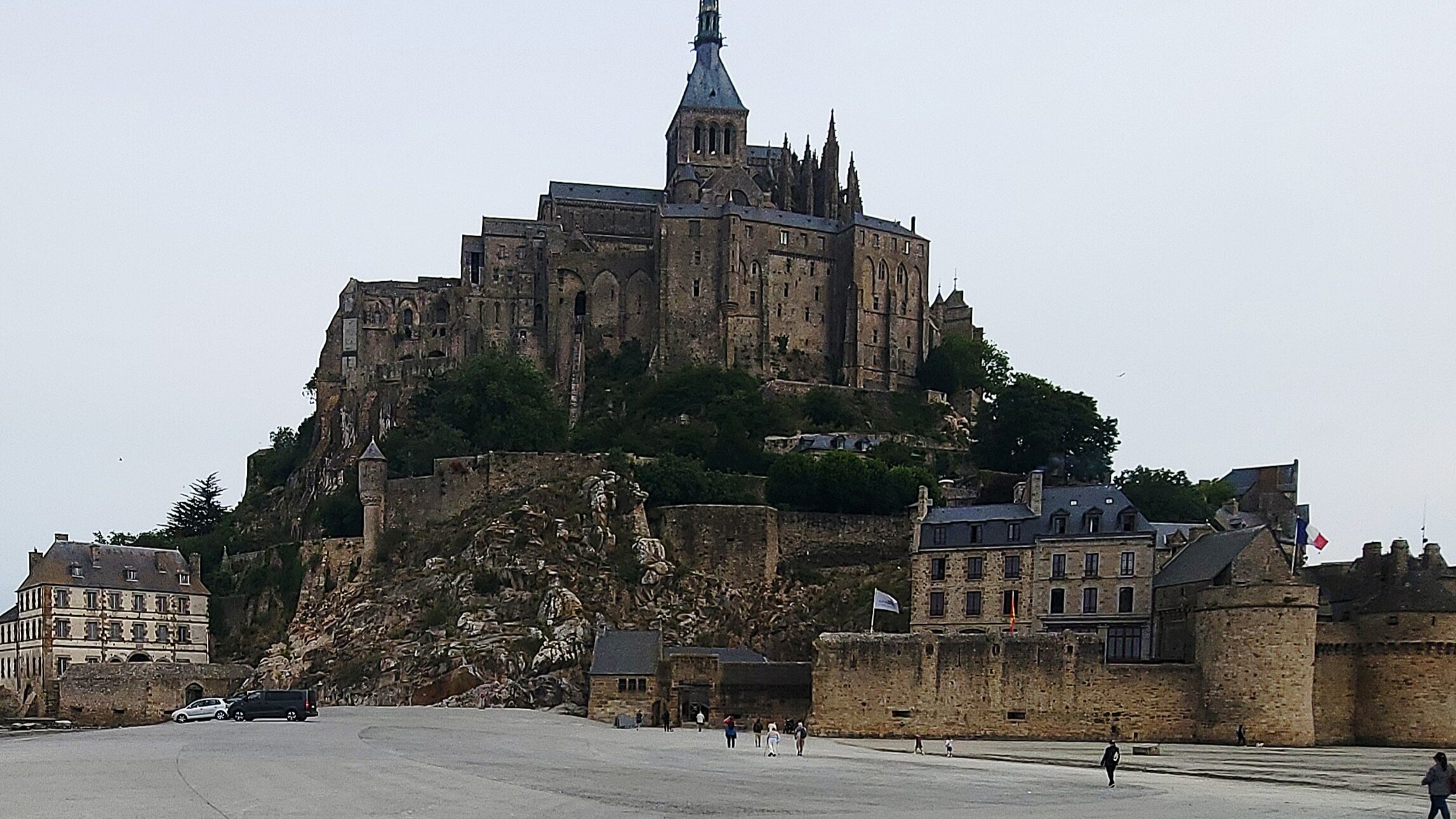
When I went, the earliest realistic departure was around 7:30 a.m., which would have put me on the island around 11:30 if everything lined up.
I took the later option, leaving closer to 9 a.m. and arriving around 2 p.m.—which is exactly why I think day trips make no sense. However you get there from Paris, you’re spending a significant part of the day in transit for a compressed visit.
Arriving mid‑afternoon is not a failure.
Arriving mid-afternoon is exactly when the island starts to make sense.
Book Your Trains The Moment Tickets Open
I booked my outbound trains the second they were released.
I didn’t book my return.
That’s how I ended up on the five‑hour local train that stops everywhere and turns a simple trip into a saga. One oversight added hours to the day.
If you don’t book your return early, you risk getting stuck with whatever scraps are left, including the every‑stop train that pauses in towns that look like they exist for a single baguette and a church bell.
Book your return when you book your outbound.
This is not something you fix later.
What To Bring (And What Will Ruin Your Day If You Get It Wrong)
Do not bring a suitcase.
You are not rolling into a hotel lobby. You are dragging wheels across medieval stone, up inclines, through crowds, onto shuttles, and questioning every decision that led you here.
If you’re coming from Paris, store your luggage. The station lockers technically exist, but finding them feels like a scavenger hunt designed by someone who hates you. I tried to find the ones at Montparnasse, gave up, and used Bounce. That’s what I use everywhere in Europe.
Bring a backpack and a small carry‑on light enough to lift, not drag. I still needed my electronics, adapters, and hair care, all the grown‑woman essentials, but kept it to a backpack and a small roller I could carry with one hand.
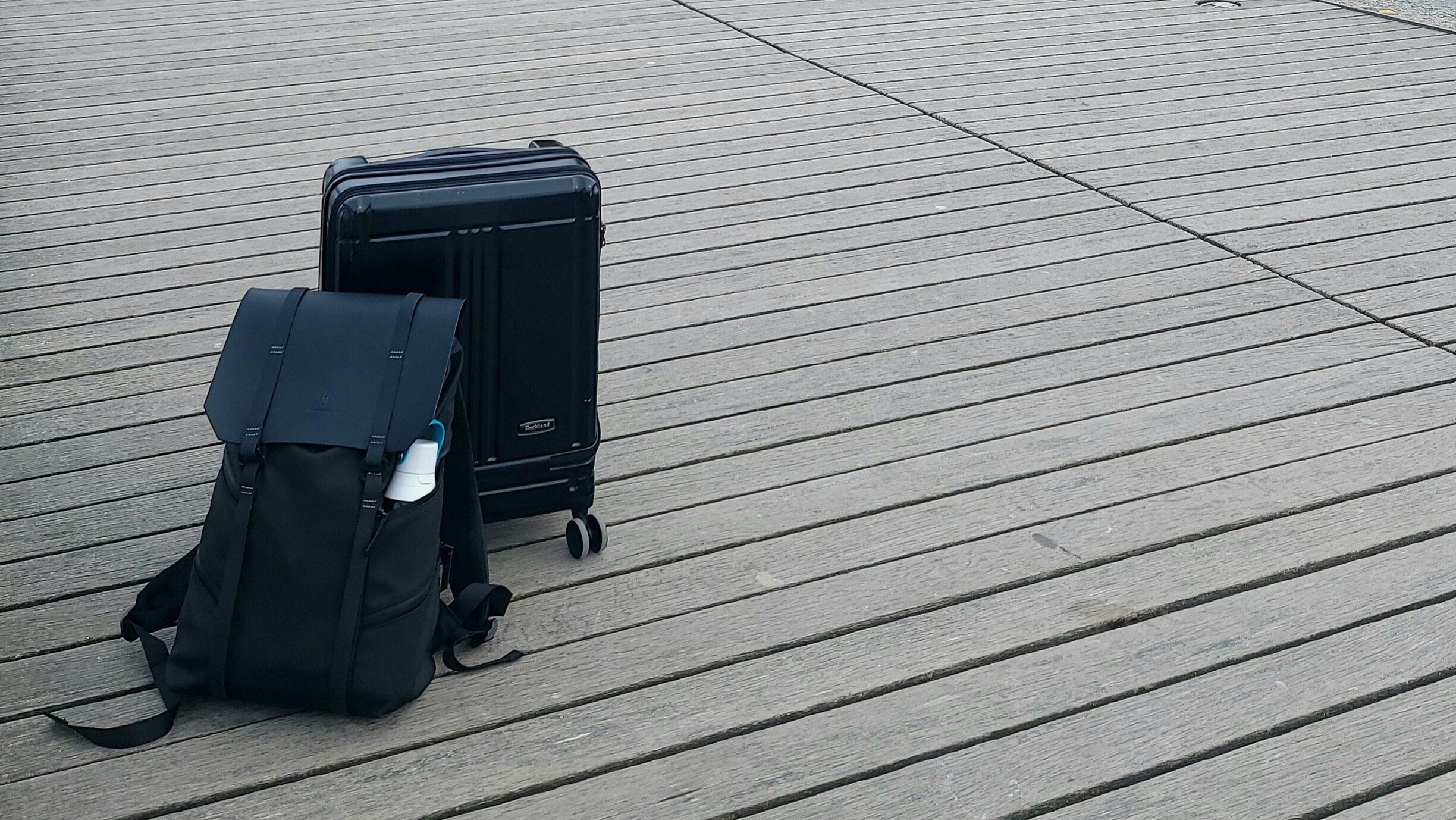
That’s the threshold.
If you’re doing the Bay Walk, which you should, bring:
- a waterproof bag or fold‑up tote
- pants that roll to the knee
- light layers for shifting weather
- tennis shoes for the island
- sandals or bare feet for the bay
- something that dries quickly
Otherwise you’re the person shivering in wet jeans wondering why no one warned you.
Where To Stay (And What Staying Actually Gives You)
If you’re doing Mont Saint Michel correctly, you stay on the island. Not near it. Not with a view of it. On it.
The entire point is being there after the day trippers leave and before they arrive, when the island exhales and remembers it’s a monastery, not a theme park.
I stayed at Auberge Saint Pierre, in room 416, and I’m telling you the room number because it matters. It has a balcony, a real one, and it’s absolutely worth requesting. The room was big, beautiful, and shockingly modern for a place built before plumbing was a concept. The water pressure alone could convert a skeptic.
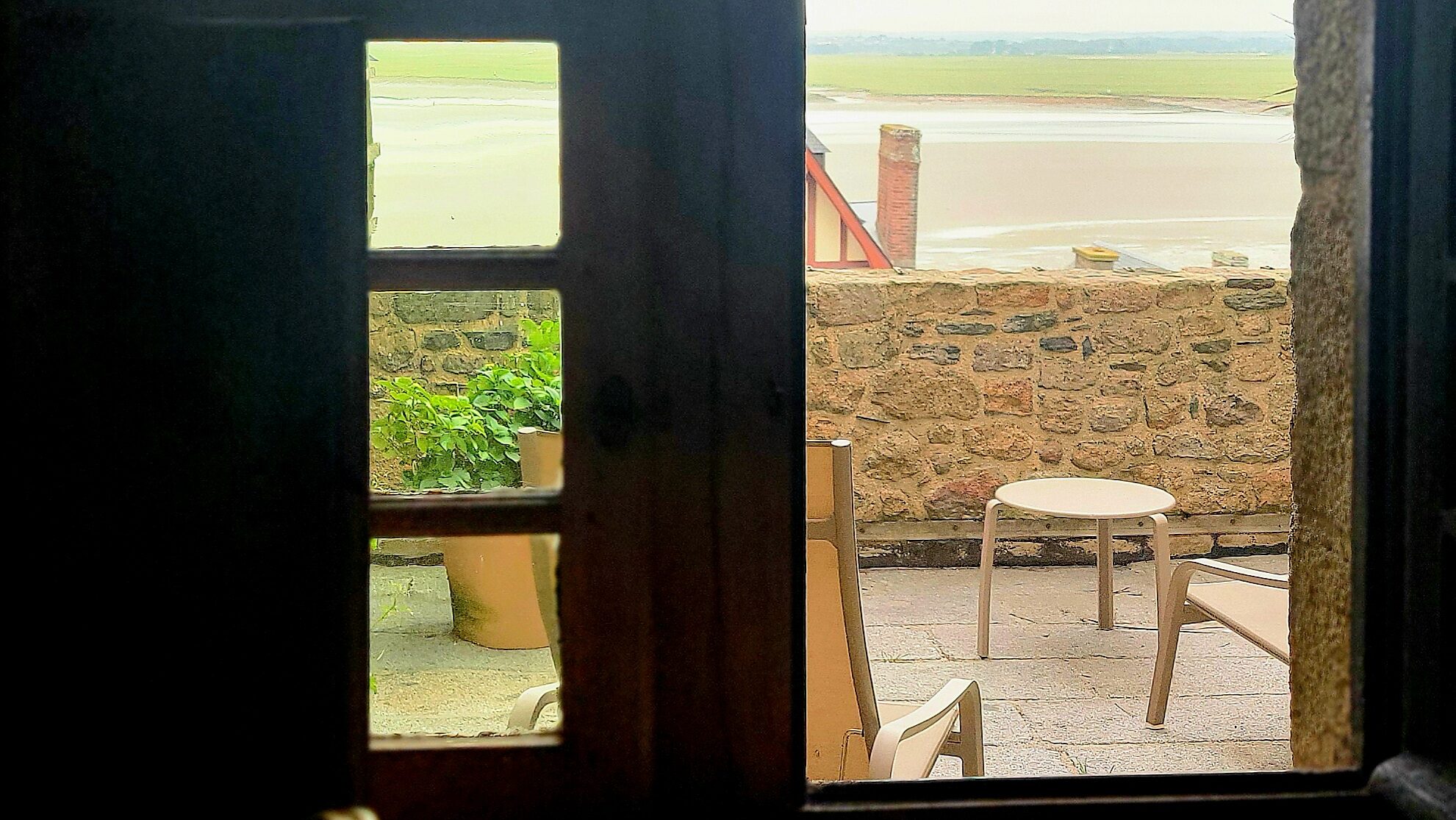
Other on-island options with rooms facing toward the bay include:
- La Mère Poulard
- Les Terrasses Poulard
- Hôtel Le Mouton Blanc
Once the crowds leave, the island shifts:
- there’s space
- there’s quiet
- there’s no pressure to move
One night is perfect.
Two if you want flexibility.
More than that and you’re repeating the experience.
Staying overnight is the difference between “I saw Mont Saint Michel” and “I experienced Mont Saint Michel.”
How To Structure Your Time So You Don’t Get The Worst Version
If you’re staying on the island, drop your bag and head straight to the Abbey.
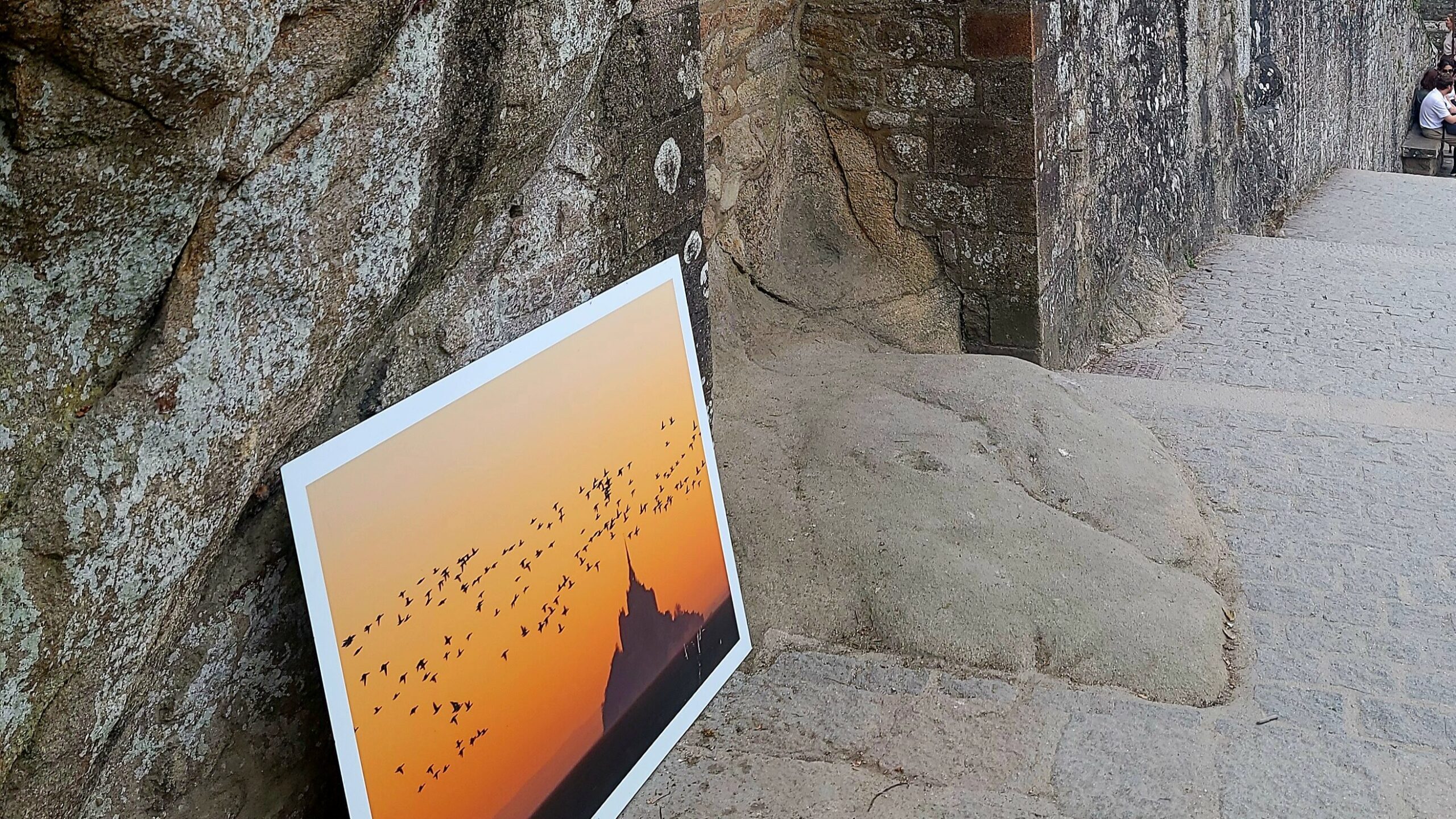
You don’t need to sprint, but you do need to be aware that staying overnight does not give you after‑hours access.
If you arrive around 2:30 from the train, you’re in the ideal window.
The Abbey Window
Official last entry:
- 6 p.m. from May 1–August 31
- 5 p.m. from September 1–April 30
One thing that isn’t particularly obvious when you’re planning this: you do not need a ticket to enter Mont Saint Michel itself. The village is free to wander. It’s the Abbey at the top that requires admission and keeps opening hours.
That distinction matters if you’re staying overnight because once the Abbey closes, Mont Saint Michel doesn’t. You can still wander the ramparts, lanes and bridge, which is basically the entire reason I keep telling you to sleep here.
But the lived reality is simple:
4pm is still packed.
When I went, 3:30 was the sweet spot. You enter before the crush peaks and experience the slow fade as day visitors leave.
Give the Abbey more time than you think you need. The official self-guided visit takes roughly 45 minutes to 1½ hours, and there are a lot of stairs, which feels like information someone should mention before you start climbing toward a medieval monastery perched on top of a rock. Large luggage also isn’t allowed inside, so this is another reason not to arrive dragging your entire European vacation behind you.
If you’re staying two nights, choose one:
- last entry day one
- first entry next morning (assuming you’re not taking one of the early trains out in the morning)
You don’t need both.
And here’s where I’m probably going to commit some kind of France related travel writing crime: the Abbey itself wasn’t all that spectacular to me.
There are some incredible spaces inside, but a lot of the visit is walking through very old, very empty stone rooms. Like, aggressively empty. Watch The Walking Dead: Daryl Dixon, which filmed at Mont Saint Michel, and there was considerably more happening in these rooms during the zombie apocalypse.
But then you get to the things that absolutely are worth slowing down for. The massive prisoners’ treadwheel is one of them, a leftover from the period when the Abbey was used as a prison. Then there’s the Crypt of the Great Pillars, where enormous stone columns are essentially holding up the Gothic choir above your head. And the cloister is beautiful: a garden surrounded by rows of tiny columns and arches, sitting at the top of La Merveille with the sky completely open above it.
But my favorite part wasn’t really a room at all. It was getting outside onto the West Terrace and looking across the entire bay. That’s actually where I first saw people riding horses across the sand and thought, Wait. You can fucking do that?
And then I sat down.
There was a pair of birds nesting hundreds of feet above the ground with this tiny fluffy baby that couldn’t have been much bigger than my hand. I probably sat there for half an hour watching one of the parents leave, come back with food and feed it. Meanwhile, all I could think was: at some point this tiny thing has to learn how to fly by essentially jumping off Mont Saint Michel. Is there a lesson first? A practice jump? Or is the entire educational program just, “Well, good luck”?
So when I tell you to give yourself extra time in the Abbey, I’m not telling you that you need three hours to stare reverently at empty stone rooms. I’m telling you not to rush through the places that make you want to stop. You only bought the ticket once. If you find yourself sitting on a terrace for half an hour watching a baby bird contemplate its terrifying future while horses cross the bay below you, sit there.
When The Island Shifts (Evening)
Once the crowds leave, the island changes.
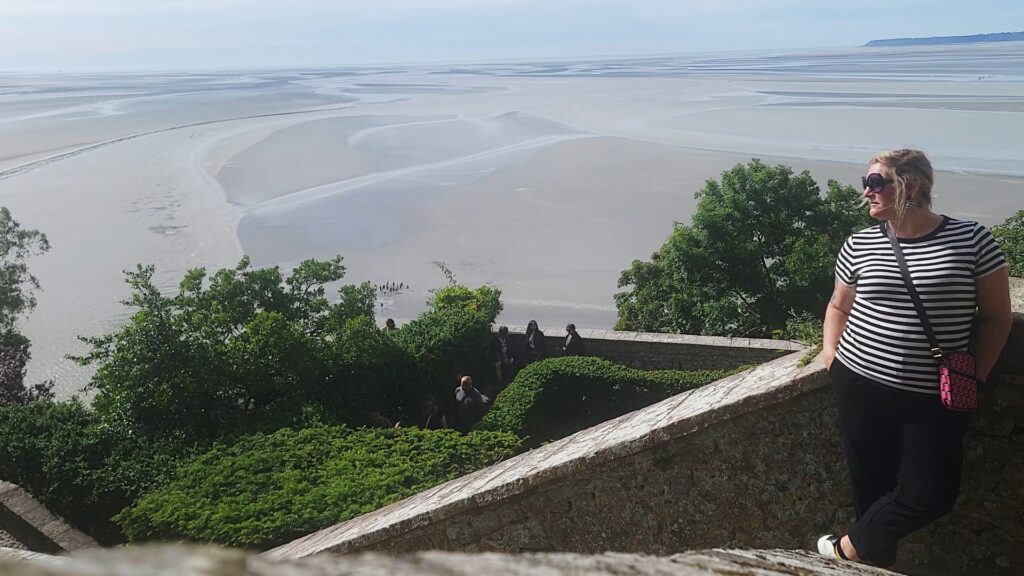
The paths open.
The noise drops.
Suddenly, you can hear yourself think.
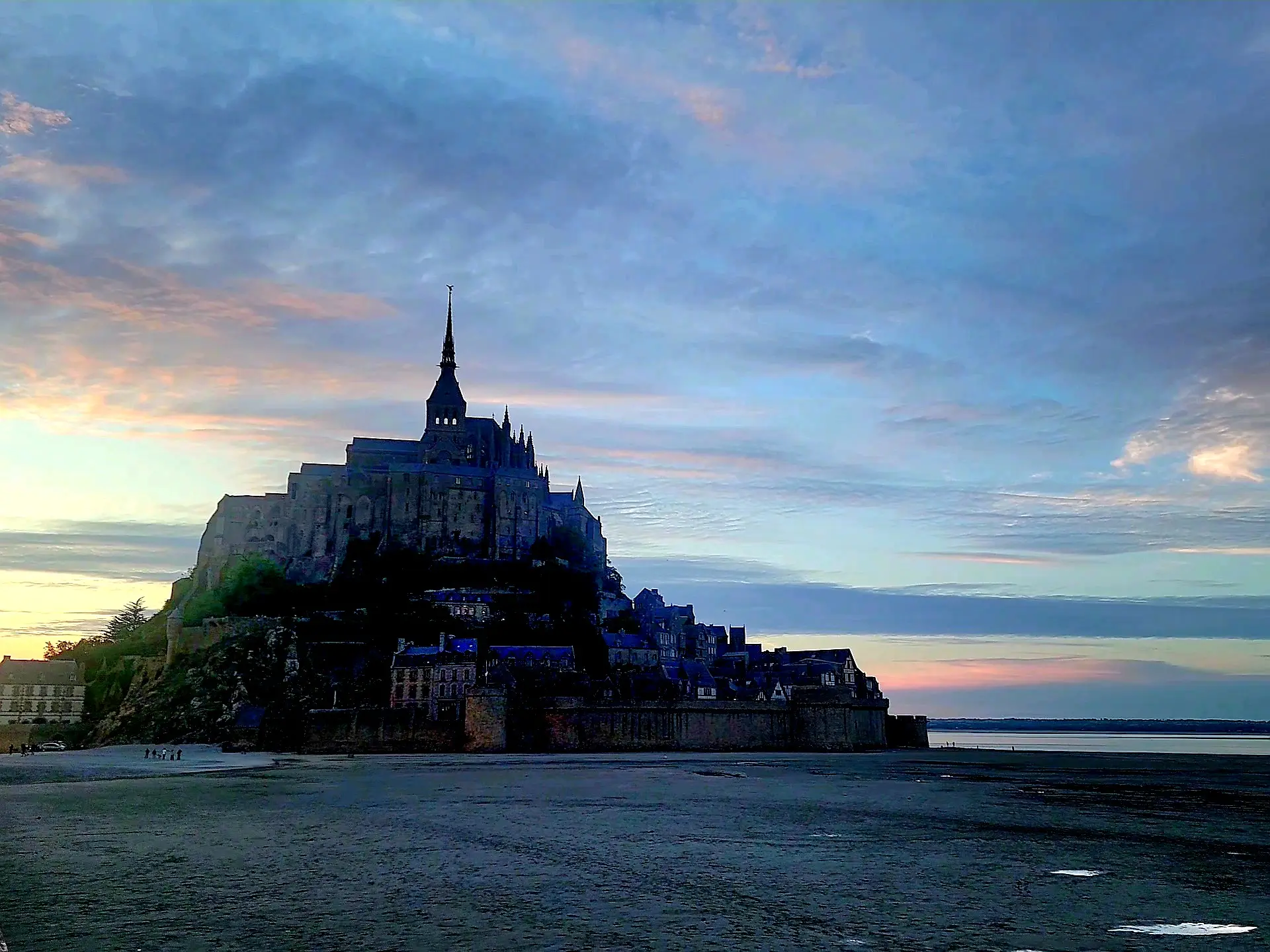
Sunset is another reason to stay. A surprising number of people linger after the tour buses leave just to watch it, and they should. Mine was all pinks and blues over the bay, and it was absolutely stunning.
I took my shoes off and went back out onto the sand, although this is one thing I would do differently next time. Guided walks head much farther into the bay, including in the evening, and I didn’t book one. I wish I had. I stayed close to the Mont because wandering deep into a tidal bay alone in the dark seemed like an unnecessarily creative way to die.
And about that dark: remember that you are sleeping on a medieval rock in the middle of a bay. Once the last light disappears, parts of Mont Saint Michel are DARK. Not atmospheric little cobblestone-street dark. I mean pathways and stone steps where I could not see where the hell I was going. If you plan to wander after sunset, throw a small flashlight in your bag or make sure your phone is charged. Some of those paths were pitch black, and I eventually stopped because it didn’t feel particularly smart.
That’s also when having the balcony paid off. I went back to my room, sat outside and watched the moon and the birds over the bay. No tour buses. No crowds moving through the Grande Rue. No trying to get somewhere before a timed ticket. I just sat there.
It was probably some of the most peaceful time I had on that entire trip to France.
Morning (The Version Almost No One Gets)
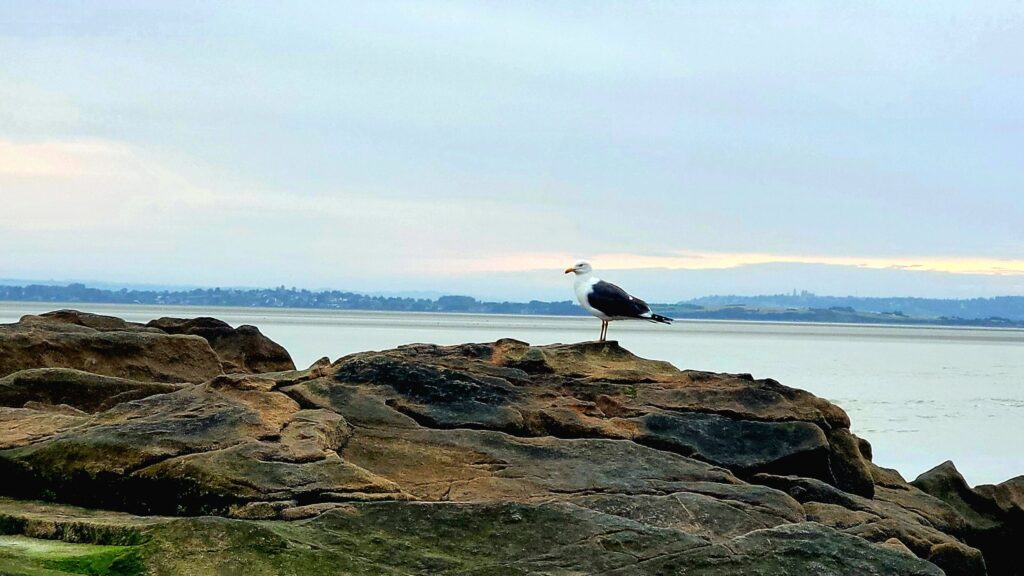
Morning is the payoff.
I was out at 5 a.m. and it was basically empty. A few workers heading to restaurants. One other photographer. That was it.
From 5 a.m. to about 7:30 a.m. you get the island the way people imagine it exists all day:
- quiet bay
- empty paths
- empty bridge
- sunrise on the Abbey
- photographs without crowds
If you skipped the Abbey the night before, do first entry now.
Otherwise wander.
By 9 a.m. it’s gone.
The Bay Walk
The Bay Walk is incredible, but it’s not the romantic wander people imagine.
The sand shifts constantly, firm in some places, soft in others, deep mud near the island.
There is nowhere on the island to wash your feet.
No hose.
No tap.
No discreet corner.
Just two small rinse pools near the entrance where everyone crowds together.
Bring something to rinse off or expect muddy ankles.
You can walk the immediate shoreline around the Mont when conditions allow, but exploring farther into the bay is a different thing entirely. The tides move extraordinarily fast and the terrain includes areas of deep mud and quicksand, which is why proper bay crossings are done with trained guides, so if you want to take a guided tour in the evening feel free to look here at all my vetted tours for the region.
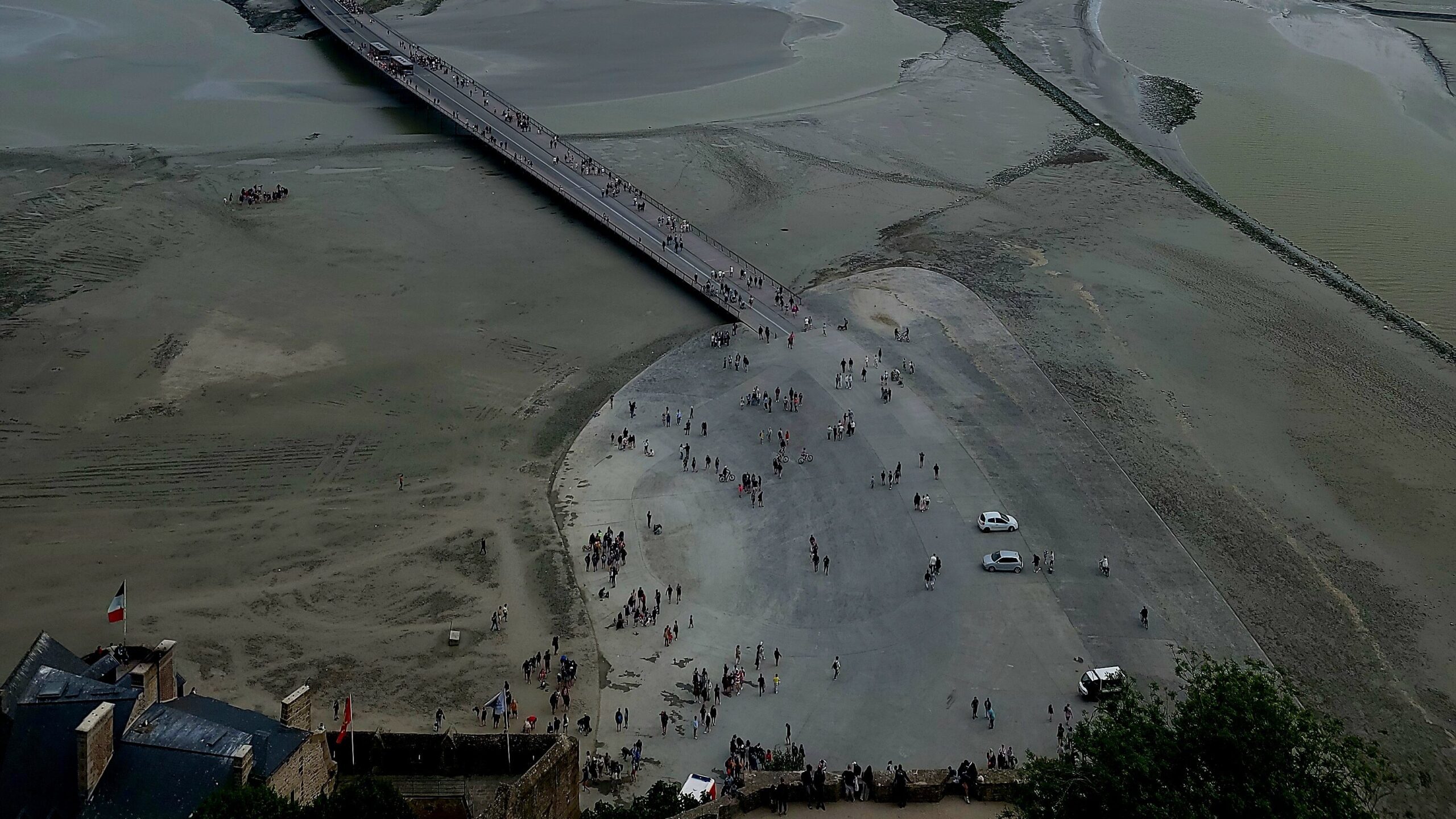
It’s elemental, messy, and completely worth it, and yet, the bay is the part of Mont Saint Michel most visitors never actually step into.
There’s also another way to experience the bay that most visitors don’t realize exists until they see horses moving across the sand in the distance. I certainly didn’t.
You can actually explore the Bay of Mont Saint-Michel on horseback, with guided rides available for different riding levels. Depending on the ride and conditions, you can head out across the sand and get an entirely different view of the Mont which, frankly, is a considerably better view than staring at the back of 4,000 people walking up the Grande Rue.
I didn’t do this on my trip, so I’m not going to pretend I can personally recommend a specific ride. But after seeing those horses out there, it immediately went onto my list for next time. If you want to look into doing it yourself, the local Mont Saint-Michel tourism site has information on horseback riding in the bay.
Food (Lower Your Expectations And Make Reservations)
If you want to eat somewhere decent, make a reservation. They expect them. And if you’re traveling solo without one, you will feel it.
I walked into a restaurant with a lot of open tables and a perfect bay view and still wasn’t seated because I was alone.
The place I actually wanted to try — La Mère Poulard — was closed for a private event the night I arrived.
I ended up eating at my hotel restaurant. The staff were kind. The food was forgettable. My steak was raw, the food had no flavor, and I was seated against a pillar facing a wall, all for almost €50.
When I was there, almost everything closed around seven.
Bring snacks.
Stock up before crossing the bridge or bring them from Paris. Everything is 5 times more expensive and extremely limiting on island.
If you want a real meal, eat on the mainland before arriving or after leaving.
The point of staying overnight is the atmosphere, the quiet, and the morning.
Not the food.
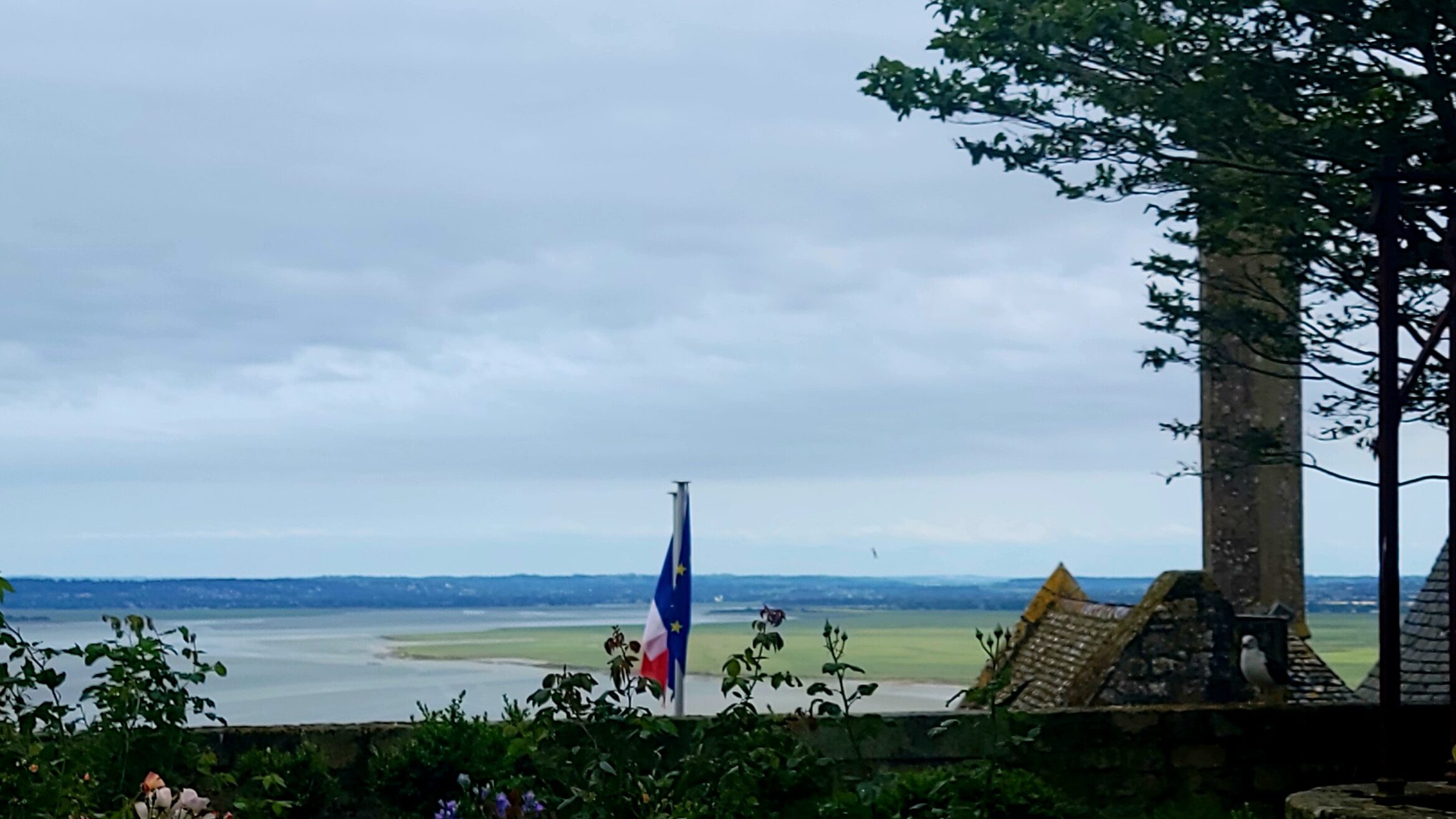
What Mont Saint Michel Actually Requires
You don’t need more time.
You don’t need a perfect plan.
You just need to make a few better decisions.
Because honestly, most people visiting Mont Saint Michel aren’t doing anything dramatically wrong. They’re just doing exactly what everyone else is doing, arriving at the same time, walking the same route, leaving at the same time, and then wondering why the entire place feels overcrowded.
Come later. Stay the night. Get up stupidly early. Walk into the bay.
Mont Saint Michel isn’t the problem. Visiting it exactly like everyone else is.